 WhatsApp
 Singapore
 Jakarta
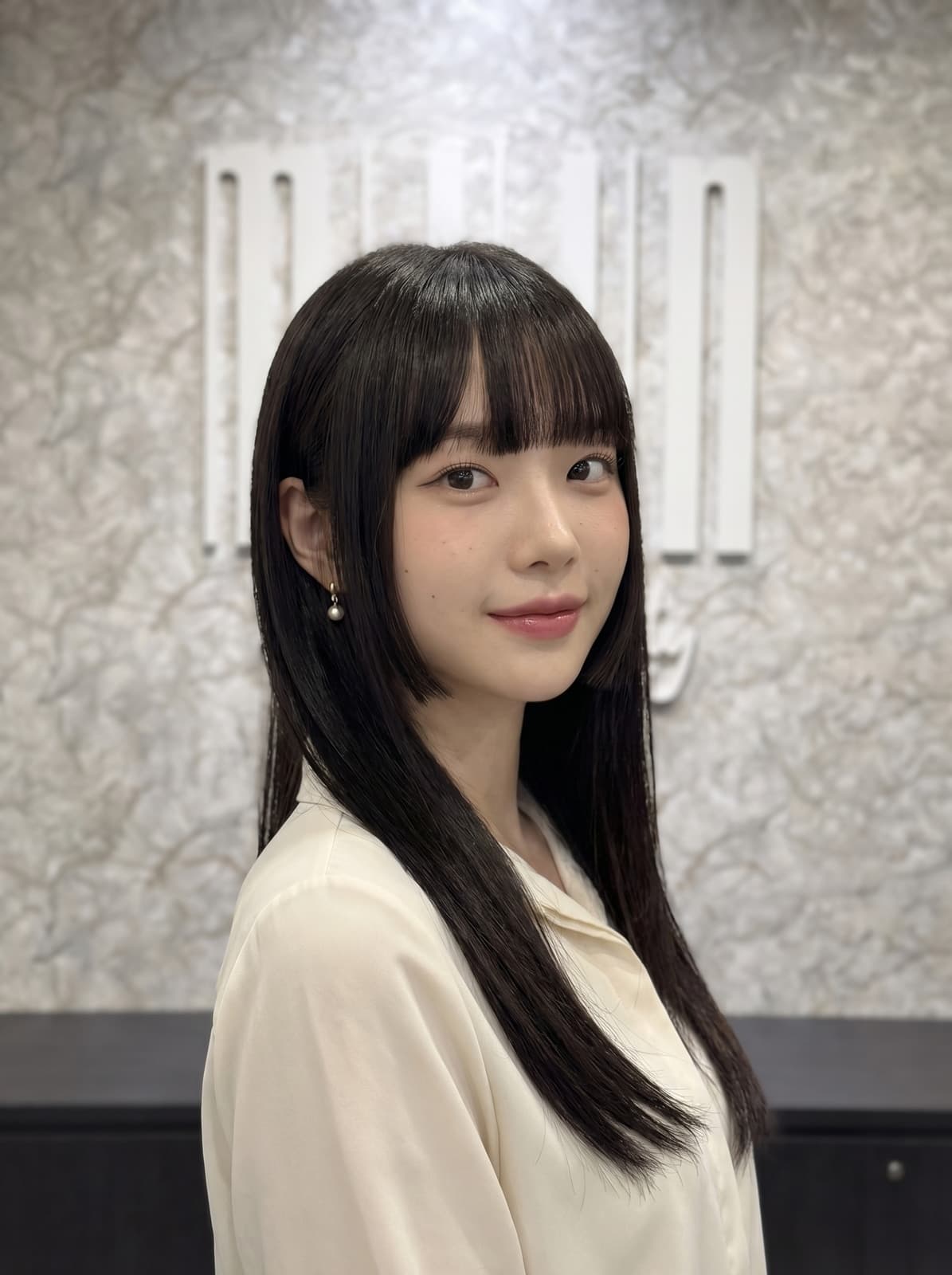
- The hime cut is a Japanese princess hairstyle with three parts — cheek-length sidepieces, straight bangs, and long back hair.
- The modern Korean hime cut softens the traditional sharp shape with wispy bangs and lightly layered sides.
- It works best on oval, heart-shaped, and long faces, and suits the thickness of Asian hair naturally.
- The sidepieces and bangs need trims every 4-6 weeks to keep the shape — the long back can wait longer.
- In Singapore's humidity, lightweight serums and a quick blow-dry keep the structured shape clean throughout the day.
Quick answer
A hime cut is a traditional Japanese hairstyle built from three distinct sections — short cheek-length sidepieces that frame the face, straight bangs across the forehead, and long straight hair at the back. The name translates to "princess cut" in Japanese, and the silhouette has been worn by Japanese royalty for centuries. Today, Korean salons have softened the sharp traditional shape into a gentler, more face-flattering version that has become one of the most talked-about cuts on Asian social media.
What is a hime cut?
The hime haircut is defined by its three-part structure. Most haircuts have one shape; the hime cut has three working together.
Part 1 — the sidepieces. Two shorter sections of hair frame the face, usually ending at the cheekbone or jawline. These are cut bluntly and fall flat against the cheeks, creating the signature princess silhouette.
Part 2 — the bangs. A clean, straight fringe sits across the forehead. In the traditional Japanese hime cut, these bangs are heavy and blunt-cut. In the Korean hime cut, they are often wispy and see-through — closer in spirit to the Korean bangs look you see on K-drama leads. For just the fringe on its own, see our fringe cut service.
Part 3 — the long back. The rest of the hair stays long, usually past the shoulders or well down the back. The long length acts as the canvas that makes the shorter front pieces stand out.
The contrast between short and long is what gives the hime cut its drama. When the three parts work together, the result is a structured, intentional look that reads as distinctly different from a standard long haircut with bangs.
The Japanese hime cut — origin and meaning
The Japanese hime cut has been worn since the Heian period (roughly 1,000 years ago). "Hime" means "princess," and the style was associated with noblewomen and court ladies. The cheek-length sidepieces were considered especially flattering because they drew attention to the face while keeping the long hair that symbolised youth and beauty.
In modern Japan, the hime cut is associated with harajuku fashion, J-pop, and alternative subcultures. It reads as bold and stylised — a clear statement rather than a subtle choice. The classic Japanese version keeps the edges sharp and graphic, with blunt bangs, precise sidepiece corners, and a clean horizontal line where the sidepieces end.
Think of it as the princess cut in its purest form — geometric, intentional, and unmistakable.
The Korean hime cut — the modern take
The Korean hime cut takes the same three-part structure and softens every edge. Korean stylists noticed that the sharp traditional shape could feel too heavy or costume-like on everyday wearers. Their fix was to soften the transitions while keeping the silhouette recognisable.
What changes in the Korean version:
- Bangs — wispy, see-through, and point-cut instead of blunt. They blend into the sidepieces rather than sitting as a separate block.
- Sidepieces — lightly layered at the ends so they taper rather than ending in a sharp corner. The silhouette stays cheek-length but the line is softer.
- Overall feel — romantic and soft rather than graphic and sharp.
This is the hime cut modern interpretation that has taken over social media in the past few years. It keeps the structured, face-framing effect of the classic princess cut but reads as everyday-wearable rather than dramatic.
At Miin in Orchard, most clients who book a hime cut want this Korean version. Your stylist will discuss which parts of the traditional shape you want to keep sharp and which you want softened.
Who does a hime cut suit?
The hime cut asian hair experience is generally positive because the natural thickness and straightness of Asian hair holds the three-part structure cleanly. But face shape matters more than hair type for deciding whether this cut works for you.
Oval face — the most flexible shape. Any length of sidepiece works, and both the Japanese and Korean versions read well.
Heart-shaped face — the hime cut is especially flattering here. The cheek-length sidepieces add visual weight at the jawline, balancing a wider forehead.
Long face — the horizontal line of the sidepieces breaks up the vertical length of the face. The bangs add another horizontal element that shortens the face visually.
Round face — longer sidepieces that extend past the chin work better than cheekbone-length ones. The softer Korean version is usually more flattering than the sharp Japanese version.
Square face — the Korean hime cut with wispy, tapered sidepieces softens angular features. Avoid the blunt traditional version, which can emphasise a strong jaw.
Hime cut vs other face-framing styles
The hime cut is often compared to curtain bangs and face-framing layers, but the structure is very different.
| Hime cut | Curtain bangs | Face-framing layers | |
|---|---|---|---|
| Structure | Three distinct parts — sidepieces, bangs, long back | Parted fringe that blends into lengths | Gradual layers that flow with the rest of the cut |
| Contrast | High — clear visual break between short and long | Soft — no sharp transitions | Minimal — everything blends |
| Commitment | Higher — the shape is very specific | Low — easy to grow out | Low — the layers grow with your hair |
| Maintenance | 4-6 weeks for sidepieces and bangs | 6-8 weeks for bangs only | 8-10 weeks for trims |
| Best for | Clients who want a bold, intentional look | Clients who want soft face framing | Clients who want movement without commitment |
If you are choosing between the hime cut and curtain bangs, the question is how visible you want the face-framing to be. The hime cut announces itself. Curtain bangs blend in. For a middle ground, check our guide on face-framing layers.
Want statement without the princess geometry? The jellyfish cut (dramatic dome-top with long underlayer) and the butterfly cut (visible two-tiered layers) are two other Asian-salon cuts that make a clear visual statement — softer than a hime but bolder than everyday layers.
Hime cut on Asian hair
Asian hair is thick, dense, and typically straight — all qualities that work in favour of the hime cut. The density keeps the sidepieces sitting flat against the cheeks instead of flaring out. The natural straightness shows the clean geometric lines clearly.
Two things your stylist will manage:
Thinning the sidepieces. Very thick Asian hair can make the sidepieces look blocky. Your stylist uses point cutting and internal thinning to keep the shape flat and elegant without losing the blunt edge.
Softening the bangs. Blunt bangs on very thick hair can sit as a heavy wall. The Korean hime cut fix is to cut the bangs in layers — the surface layer is slightly longer and see-through, while a shorter layer underneath adds density. This gives bangs that move naturally rather than sitting as a solid block.
If your hair is fine or thin, the hime cut still works but needs adjustment. Your stylist will keep the sidepieces thicker and avoid over-texturising the bangs so the overall shape has enough visual weight.
Styling a hime cut in Singapore's humidity
Singapore's climate is the main challenge for any structured cut. The hime cut depends on clean lines — frizz and flyaways work against the effect.
Daily routine for a sleek finish:
- Blow-dry the sidepieces with a flat brush, pointing the airflow downward to keep them flat against the cheeks.
- Blow-dry the bangs forward with a round brush for a soft curved shape, or flat for a sharper line.
- Apply a lightweight anti-frizz serum to the lengths — avoid the bangs and sidepiece roots, which will go greasy quickly.
- Use a small amount of smoothing cream on the sidepieces to keep them in place through humidity.
Products that work in Singapore:
- Lightweight anti-frizz serum (apply to mid-lengths and ends only)
- Smoothing cream for the sidepieces (tiny amount)
- Hairspray for the bangs only if you need extra hold
- Avoid heavy oils — they collapse the shape
On very humid days, many clients carry a small texturising spray to refresh the sidepieces mid-day.
Colour options for a hime cut
The hime cut pairs well with both dark and light colours, but the structured shape reads differently depending on the tone.
Natural black or dark brown — classic and graphic. This is the version you see in most traditional Japanese references. The contrast between hair and skin makes the three-part structure pop.
Warm brown or caramel — softens the look and reads more Korean. Warm tones flatter Asian skin and take the edge off the structured silhouette.
Ash or cool tones — trendy and modern. Ash browns and cool blondes give the hime cut a K-pop music video quality.
Highlights or babylights — break up the solid colour and add movement to the long back section. Face-framing highlights on the sidepieces draw attention to the cheekbones.
Maintaining a hime cut
Trim schedule. Book a sidepiece and bang touch-up every 4-6 weeks. These two parts define the shape and lose it fastest. The long back can go 8-10 weeks between full trims.
What to ask for at trims. Tell your stylist to only trim the sidepieces and bangs. If you trim the long back every visit, you will slowly lose the length that makes the hime cut work.
Growing it out. The hime cut does not grow out as gracefully as layered styles. The sharp three-part structure gets muddy as the sidepieces lengthen. Most clients either commit to maintaining the shape or plan a transition cut — usually to face-framing layers or a curtain-bang look — when they are ready to move on.
Where to get a hime cut in Singapore
The hime cut is not a cut you want to trial with a stylist who does not know the shape. The three parts need to work together — the sidepiece length, the bang weight, and the way they meet are all decisions that affect how the cut reads on your face. A mis-proportioned hime cut looks amateur; a well-proportioned one looks editorial.
At Miin in Orchard, our Korean women's haircut service includes the hime regularly in both the traditional Japanese form and the modern Korean form. Your stylist starts with a consultation about which version you want — how sharp or soft, how heavy or wispy the bangs should be, and how short the sidepieces should sit — before any scissors come out.
If you are between the hime cut and a softer option, consider asking about face-framing layers or curtain bangs instead. Both give face-framing movement without the structured commitment of a full princess cut.
Book a consultation via WhatsApp or visit us at 350 Orchard Rd, #01-04 Isetan Scotts. We will help you decide whether the hime cut is right for your face, your hair, and your daily routine before committing to the cut.