 WhatsApp
 Singapore
 Jakarta
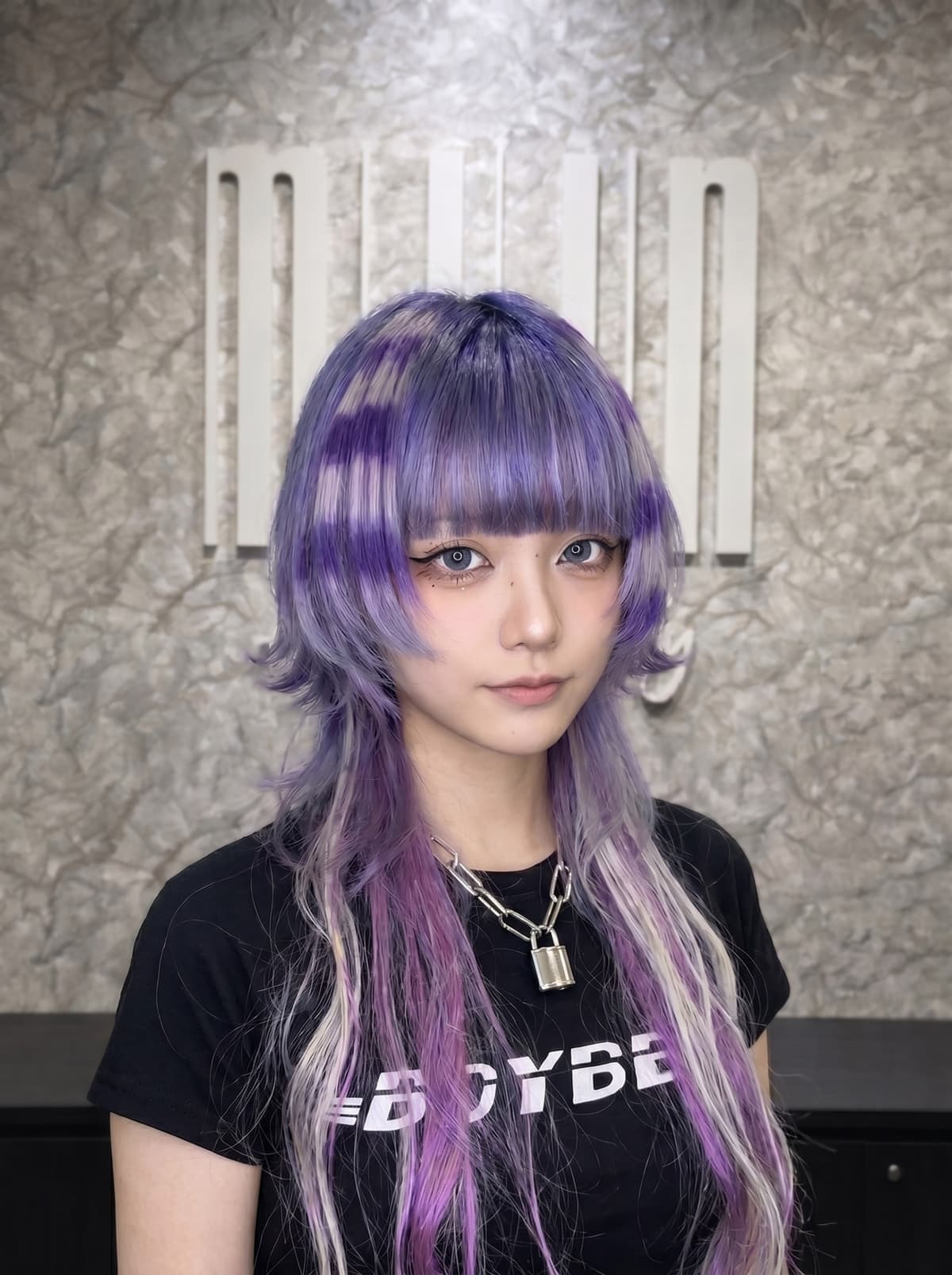
- The jellyfish cut is a two-layer haircut with a short rounded top and a long flowing underlayer — the silhouette looks like a jellyfish.
- It originated in Korean salons and spread globally through TikTok and K-pop styling.
- It is sharper and more graphic than a butterfly cut, and more extreme than a traditional mullet.
- The cut works best on thicker hair and suits oval, heart-shaped, and long faces.
- Singapore's humidity requires a humidity-resistant styling routine on the top layer — the dome shape is the whole look.
Quick answer
A jellyfish cut is a dramatic two-layer haircut with a clean rounded top — almost like a bowl cut — that sits above a long, flowing underlayer. The two sections stay strictly separate with no blending between them. The name comes from the silhouette, which resembles a jellyfish's dome body with trailing tentacles below. It is one of the boldest cuts to come out of Korean salons in recent years and has spread internationally through TikTok, K-pop idols, and street fashion.
What is a jellyfish cut?
The jellyfish haircut is built from two distinct layers stacked on top of each other.
The top layer is short, rounded, and sits like a cap or bowl around the crown. It usually ends somewhere between the ears and the jawline. The key is that the ends form a clean horizontal line — there is no tapering, no blending, and no gradient.
The bottom layer is long. It starts where the top layer ends and flows down past the shoulders, often to the mid-back or further. This underlayer keeps your existing length and gives the cut its trailing, jellyfish-like quality.
The gap between the two layers is what defines the style. A butterfly cut also has two tiers, but the layers overlap and blend. The jellyfish cut keeps them separate on purpose — you can clearly see where one ends and the other begins.
The effect is architectural. It reads as an intentional design choice rather than a natural silhouette, which is exactly why the cut has become associated with fashion-forward and edgy Korean haircut aesthetics.
Where did the jellyfish cut come from?
The jellyfish cut first appeared in Korean salons in the early 2020s and spread globally through social media. K-pop idols wore modified versions of the cut in music videos, and TikTok stylists started recreating the look and tagging it as "jellyfish hair." Within a couple of years it went from niche Seoul salon request to a style recognised worldwide.
The cut sits in a lineage of two-layer Korean styles. The mullet came first. The butterfly cut softened the mullet. The wolf cut roughed it up. The jellyfish cut took the shape in the opposite direction — sharper, cleaner, and more graphic than anything before it.
It is, in other words, the most architectural of the two-layer family.
Jellyfish cut vs butterfly cut vs wolf cut
These three styles all have two layers but read completely differently. Here is how they compare.
| Jellyfish cut | Butterfly cut | Wolf cut | |
|---|---|---|---|
| Top layer | Short rounded bowl with a hard edge | Face-framing layers that blend into the length | Choppy, disconnected layers with texture |
| Transition | Visible gap between top and bottom | Soft blending between tiers | Shaggy, deliberately messy |
| Length difference | Extreme — short top, very long bottom | Moderate — distinct but not dramatic | Moderate |
| Vibe | Edgy, architectural, fashion-forward | Polished and feminine | Rock-and-roll, effortless |
| Maintenance | Higher — the shape needs regular trims | Moderate | Moderate |
| Best for | Bold clients wanting a statement cut | Clients wanting face-framing volume | Clients wanting textured, lived-in layers |
Jellyfish vs butterfly. If you want two tiers that feel polished and wearable, go with the butterfly cut. If you want two tiers that make a statement, the jellyfish is your cut.
Jellyfish vs wolf. The wolf cut is textured and intentionally messy. The jellyfish is clean-edged and structured. Both are edgy; they just express edginess in opposite ways.
Mullet jellyfish cut connection. A mullet gradates from short front to longer back. The jellyfish takes the mullet idea and sharpens it — instead of a gradient, you get a clear two-part silhouette. People who want a bolder mullet often end up with a jellyfish.
Jellyfish vs hime cut. Both are graphic, architectural statement cuts. The hime cut uses Japanese princess-style geometry — cheek-length sidepieces and blunt bangs with a long back. The jellyfish uses a rounded bowl-top with a long underlayer. Different geometries, same intentional-fashion energy.
Who does the jellyfish cut suit?
The jellyfish hairstyle is not for everyone. It is a commitment to an unconventional silhouette. Here is who tends to pull it off well.
Hair texture. Thicker hair holds the rounded top shape better. Thin or fine hair can struggle to maintain the dome — the top layer falls flat and the cut loses its signature look. If you have fine hair and love the style, your stylist may suggest a partial perm on the top section to add lasting volume.
Face shape.
- Oval face — works with any version of the cut
- Heart-shaped face — the rounded top balances a narrower chin
- Long face — the horizontal line of the top layer breaks up the vertical length
- Round face — tricky. The dome top can widen a round face. Consider asking your stylist for a softer, less rounded top layer
- Square face — possible with a softer interpretation of the top
Personality and lifestyle. The jellyfish cut gets noticed. If you want a haircut that disappears into the background, this is not it. If you enjoy being asked about your hair and working with an unconventional silhouette, you will love it.
Jellyfish cut on Asian hair
Asian hair is generally well-suited to the jellyfish cut because the natural thickness supports the rounded top shape. The straight texture also shows the graphic, architectural lines clearly.
Two things your stylist will think about:
Managing bulk. Thick Asian hair can make the rounded top layer sit too heavy and blocky. Your stylist will thin the top internally while keeping the outer edge blunt, so the silhouette stays clean but the weight feels right.
Keeping the line crisp. The jellyfish cut lives or dies by the clean horizontal line between top and bottom. Korean stylists use precision cutting techniques to get that line right — it is not a cut you want to risk with a stylist unfamiliar with the shape.
Styling a jellyfish cut in Singapore
Singapore's humidity is a real challenge for this cut. The top dome needs structure, and humidity works against structure.
Daily routine:
- Blow-dry the top layer with a round brush, rolling inward to create the domed shape. Focus on the roots for lift.
- Blow-dry or air-dry the underlayer — it needs less attention because the length does the work.
- Apply a texturising spray to the top layer to separate the pieces and add hold.
- Finish with a humidity-resistant hairspray on the top only.
Tools that help:
- Round brush (medium to large) for the top dome
- Small curling iron or wand for refining the top shape
- Texturising spray — not cream or oil, which collapse the volume
- Humidity-resistant hairspray for hold
Products to avoid in Singapore:
- Heavy styling creams and waxes — they weigh the top flat
- Leave-in oils on the top layer — save these for the long underlayer only
- Anything labelled "sleek" or "smoothing" on the top — you want volume, not flatness
The long underlayer is easy. It survives humidity the way any long straight hair does — a lightweight anti-frizz serum is usually enough.
Adding a perm to a jellyfish cut
A perm is a common addition for people who want their jellyfish cut to hold without daily styling. Two options.
Perm the top only. A partial digital perm on the top layer creates lasting volume and shape in the dome. The underlayer stays straight and long. This is the easiest-to-maintain version — the top holds its shape overnight, and a quick air-dry refreshes it in the morning.
Perm both layers. Some clients perm the top and the underlayer for a softer, wavier jellyfish look. The perm on the underlayer adds body and movement so the long hair does not just hang. This version reads as more feminine and less architectural.
Your stylist at Miin can recommend the right perm strength and rod size based on your hair type and the look you want. Our Korean perm guide breaks down each perm type in detail if you want to compare options first.
Maintaining a jellyfish cut
Trim schedule. Every 5-7 weeks for the top. The rounded shape and the clean horizontal edge lose definition fast as the top layer grows. The long underlayer can go 8-10 weeks between full trims.
Top-only touch-ups. Many clients book mini-appointments for the top layer only between full trims. These take 20-30 minutes and keep the signature shape clean.
Growing it out. The jellyfish cut does not transition easily into other styles. The short top layer has to grow past shoulder length before it blends with the rest. Most clients transition through a butterfly or wolf cut on the way back to a one-length style.
Is the jellyfish cut still trending?
Short answer: yes, but it has matured. When the jellyfish cut first went viral, versions online were deliberately extreme — very short dome tops, very long underlayers, maximum contrast. The current Korean salon version is more wearable. The top is less of a helmet and more of a soft rounded cap. The contrast is still there but the whole look feels editorial rather than costume-like.
If you saw earlier TikTok versions and thought "too much," the version your stylist at Miin would cut today is probably closer to what you want.
Where to get a jellyfish cut in Singapore
The jellyfish cut is a precision cut. The clean line between layers is not something you eyeball — it takes Korean salon training in bowl-cut and layered techniques to get right. A poorly proportioned jellyfish cut looks like a bad mullet. A well-proportioned one looks editorial.
At Miin in Orchard, our Korean women's haircut service handles this style regularly. Your stylist will discuss how extreme or soft you want the top dome, how long the underlayer should sit, and whether a partial perm makes sense for your hair type and lifestyle.
If you are not sure whether you want the jellyfish or something gentler, browse our guides on the butterfly cut and the wolf cut — both are less committed versions of the same two-layer idea.
Book a consultation via WhatsApp or visit us at 350 Orchard Rd, #01-04 Isetan Scotts. The jellyfish cut is bold, but with the right stylist, it reads as intentional and cool rather than overdone.