 WhatsApp
 Singapore
 Jakarta
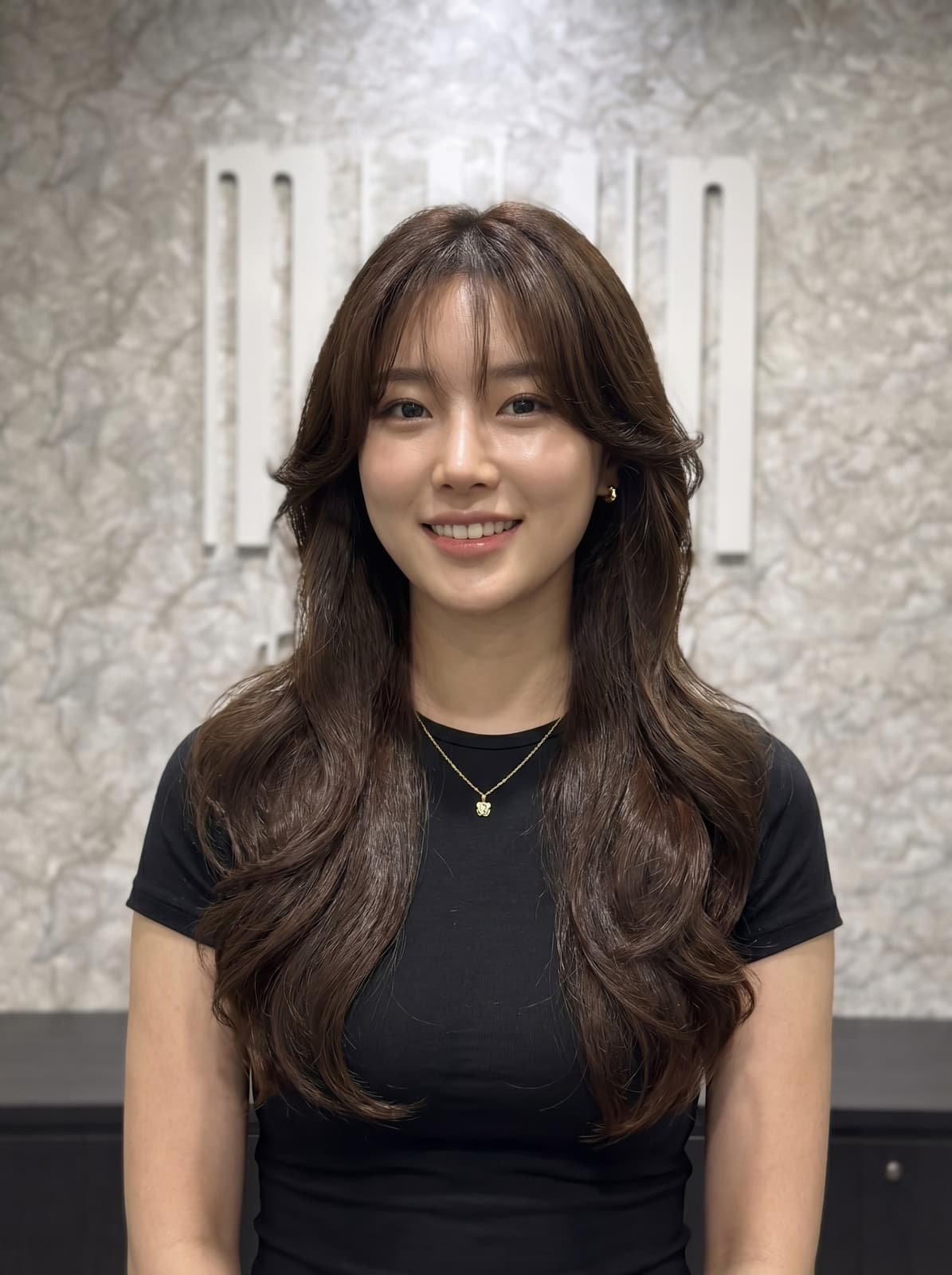
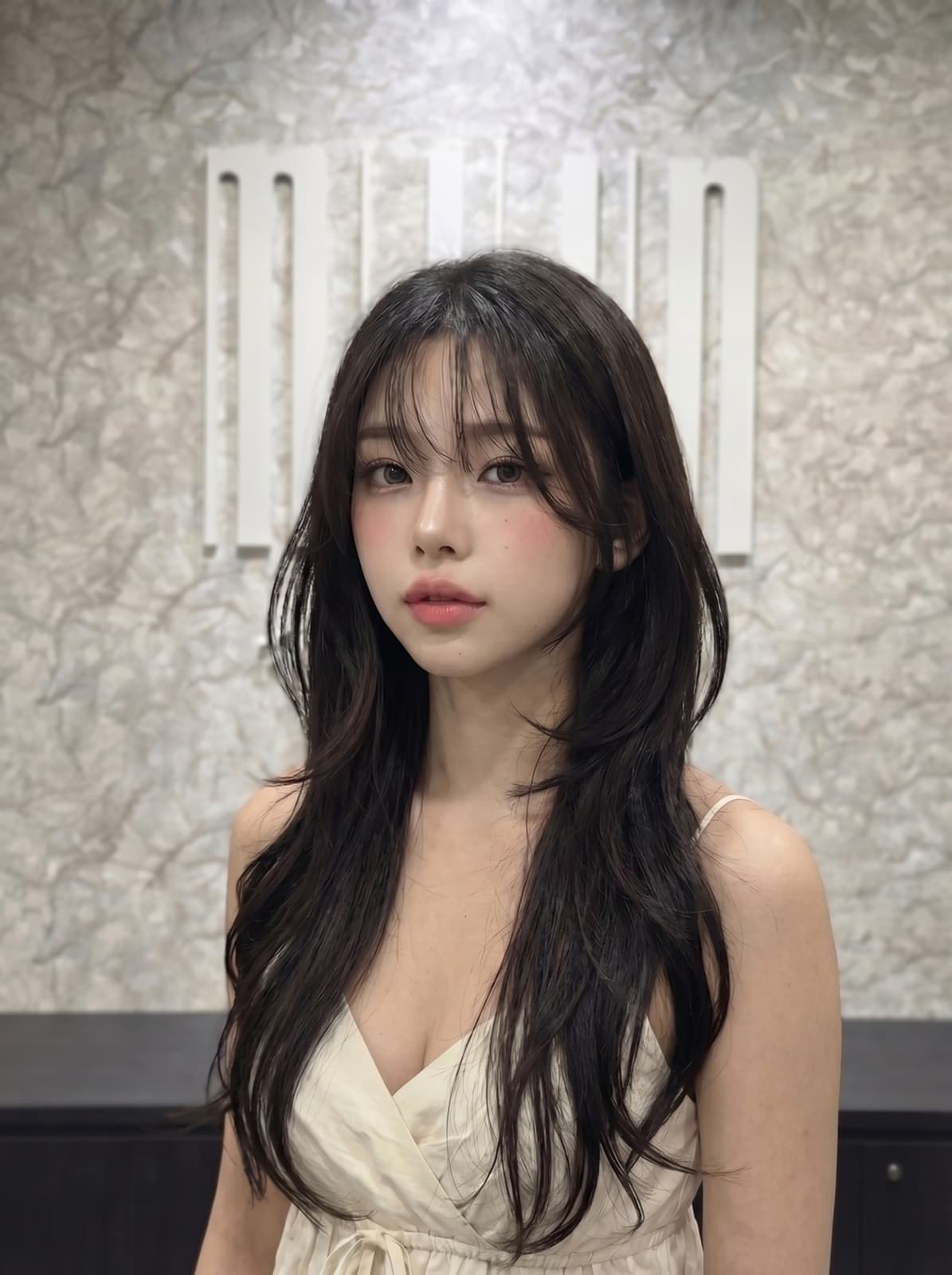
- The butterfly cut is a layered hairstyle with shorter face-framing layers on top and longer layers underneath, creating a two-tiered silhouette that looks like butterfly wings.
- It differs from a hush cut (softer, blended) and wolf cut (choppier, wilder) in how distinct the layers are — the butterfly cut sits in between with clear but polished separation.
- Works on all hair lengths from short bob to waist-length, and suits both straight and wavy textures.
- Face shape determines where your stylist places the shortest layers — the cut is fully customisable to your features.
- In Singapore's humidity, the butterfly cut holds its shape well because the layers create natural lift and movement.
Quick answer
A butterfly cut is a layered hairstyle where shorter layers frame your face on top and longer layers extend below, creating two distinct tiers of length. The silhouette — wide and full at the top, narrower and flowing at the bottom — is what gives the cut its name. It suits all hair lengths, works on both straight and wavy textures, and has become one of the most requested styles at Korean salons thanks to its blend of volume, movement, and maintained length.
What is a butterfly cut?
The butterfly cut hair style creates a clear two-tiered silhouette. The top tier consists of shorter, voluminous layers — typically starting around the chin or cheekbone — that frame the face and add body. The bottom tier keeps your existing length, falling long and sleek beneath the shorter layers.
When you move, the two sections separate and flow at different rates, creating a layered wing-like effect. This is a butterfly layer hair cut in its simplest form: strategic layering that gives you volume and face-framing movement without sacrificing overall length.
What makes the butterfly cut different from standard layers is the intentional gap between the short and long sections. Regular layers blend gradually from short to long. A butterfly cut hairstyle creates a visible jump — the face-framing pieces are noticeably shorter than the lengths beneath them. This contrast is what gives the style its drama and personality.
Korean stylists have popularised a refined version of the butterfly cut that uses softer transitions and point-cut texturing to keep the look polished rather than harsh. At Miin in Orchard, your stylist adapts the layer placement, texturing technique, and face-framing pieces to suit your specific face shape and hair type.
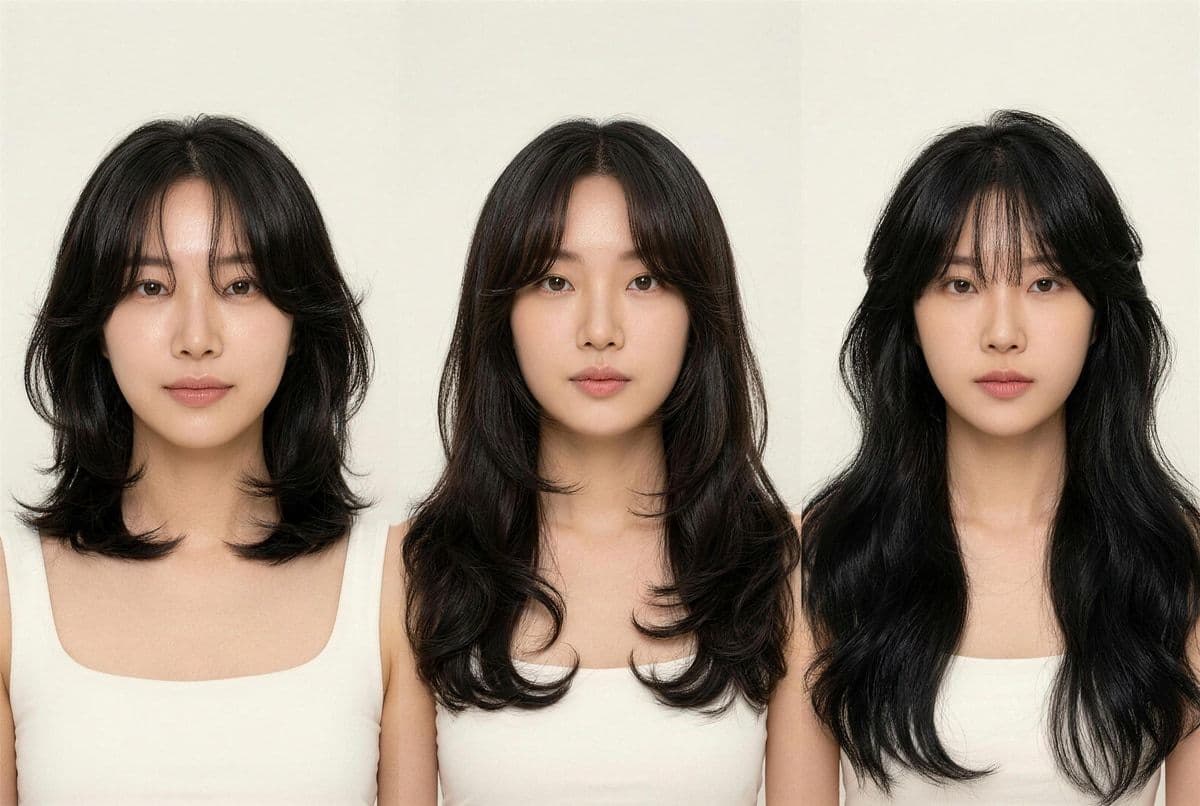
Butterfly cut by hair length
Butterfly cut long hair
This is the most popular version and the style that made the butterfly cut famous. On long hair (past the shoulders to waist-length), the two-tiered effect is most visible. Shorter layers start at the chin or collarbone, creating a full, bouncy top half that floats above the longer bottom half.
Butterfly cut long hair works beautifully with minimal styling — the weight of the long layers pulls everything into place naturally. You get movement and volume at the top without losing the length you have worked to grow. A light texturising spray separates the layers and adds definition.
Butterfly cut short hair
A butterfly cut short hair version works at chin to shoulder length, though the effect is more subtle than on long hair. The stylist places the shorter face-framing layers higher (around the cheekbone or jawline) and keeps the back slightly longer to maintain the two-tiered contrast.
The short version is a good option if you want face-framing movement without a full bob. It reads as a modern, Korean-style short layered cut rather than the dramatic wing silhouette of the longer version.
Medium-length butterfly cut
At shoulder to collarbone length, the butterfly cut hits a sweet spot. The layers have enough room to separate and create visible movement, but the cut still feels practical and easy to manage. This is a versatile length that works for both professional settings and casual styling.
Butterfly cut on different textures
Butterfly cut straight hair
Straight hair shows the architecture of a butterfly cut more clearly than any other texture. The distinct layers, the face-framing pieces, and the two-tiered silhouette all read as clean, graphic lines. Butterfly cut straight hair has a sleek, polished quality that works well in professional and formal settings.
If your straight hair is very thick, your stylist will thin the ends of each layer so they do not stack and create bulk. If it is fine, the layers are cut to maximise the appearance of volume, making the hair look thicker and fuller than it actually is.
Butterfly cut with waves or curls
On wavy or curly hair, the butterfly cut creates a softer, more voluminous silhouette. The layers separate naturally as the hair curls, adding bounce and dimension. If you have a digital perm or natural waves, the butterfly cut enhances the movement you already have.
Consider adding a perm to the top layers only if you have straight hair but want that wavy butterfly look. A partial digital perm on the face-framing layers creates lasting movement without processing all your hair.
Butterfly cut with bangs
Adding bangs to a butterfly cut creates a framed, polished look. The butterfly cut with bangs works with several fringe styles:
- Curtain bangs — the most popular pairing. The bangs blend into the face-framing layers, creating a seamless flow from fringe to top tier. This is the classic Korean butterfly cut look.
- See-through bangs — a Korean staple. Wispy, lightweight bangs add softness without covering the forehead completely. They complement the airy, layered quality of the cut.
- Full bangs — a bolder option that frames the face with a clean horizontal line at the top. This contrasts with the layered movement below, creating a structured yet feminine look.
Your stylist at Miin will recommend a fringe style based on your face shape, forehead size, and hair texture.
Butterfly cut vs hush cut vs wolf cut
These three layered styles are often confused. Here is how they differ.
| Butterfly cut | Hush cut | Wolf cut | |
|---|---|---|---|
| Layer style | Two distinct tiers — shorter on top, longer underneath | Soft, blended layers throughout — barely visible separation | Choppy, disconnected layers with visible texture |
| Silhouette | Full top, flowing bottom — butterfly wing shape | Smooth, oval silhouette — sleek and seamless | Shaggy, mullet-inspired — volume on top, wispy at bottom |
| Vibe | Polished and feminine | Understated and elegant | Edgy and textured |
| Maintenance | Moderate — trim every 6-8 weeks | Low — grows out gracefully | Higher — needs regular texturising to keep the shape |
| Best for | Adding volume while keeping length | Clients wanting subtle layers only | Clients wanting a bold, fashion-forward look |
Hush cut vs butterfly cut: The hush cut is the subtler sibling. If you want layers that nobody can quite pinpoint — hair that just looks naturally good — a hush cut is the better choice. If you want visible layers with face-framing volume and a distinct two-tiered shape, the butterfly cut delivers more drama. The hush cut vs butterfly cut decision comes down to how visible you want the layering to be.
Wolf cut vs butterfly cut: The wolf cut is choppier and more rebellious. It has a mullet-inspired shape with heavy layers on top and thin, wispy ends. The butterfly cut is more refined — the layers are structured and polished rather than deliberately messy. The wolf cut vs butterfly cut choice depends on whether you want polished or edgy. For a deeper side-by-side, see our hush cut vs wolf cut comparison.
What about a jellyfish cut or hime cut? Two related styles worth considering: the jellyfish cut is the bolder sibling of the butterfly — a dramatic mullet-butterfly hybrid with a clear dome-shaped top layer and long underlayer. The hime cut is a Japanese princess-style cut with sharp cheek-length side pieces and blunt bangs, giving a more graphic, vintage silhouette. Both trade the butterfly's softness for more statement shape.
Which face shape suits a butterfly cut?
The butterfly cut hairstyle is adaptable to every face shape. The key is where your stylist places the shortest layers.
Round face — place the shortest layers at the jawline or below to elongate the face. Avoid layers at cheekbone level, which adds width. Longer face-framing layers that extend past the cheeks create a slimming effect.
Oval face — the most versatile shape for a butterfly cut. Any layer placement works. Experiment with the top tier starting at the chin, cheekbone, or even higher.
Square face — soft, wispy layers around the jawline soften angular features. The butterfly cut with bangs (curtain or see-through) draws attention upward and reduces the visual weight of a strong jaw.
Long face — shorter face-framing layers at cheekbone level add width and break up the vertical line. A butterfly cut with bangs also helps by covering the forehead and shortening the perceived face length.
Heart-shaped face — layers that add volume at chin level balance a wider forehead and narrower jawline. The bottom tier of a butterfly cut naturally provides this balance.
Butterfly cut for Asian hair
Asian hair tends to be thick, straight, and dense — which actually makes it ideal for a butterfly cut. The natural density holds the layered structure well, and the weight of the hair keeps the shape looking clean and intentional.
Your stylist will likely use point cutting and slide cutting to remove bulk from the top layers. Without this texturising step, thick Asian hair can stack and puff outward rather than flowing in distinct tiers.
In Singapore's humidity, the butterfly cut holds up well because it relies on structure rather than styling. The layers create natural movement and lift, so you spend less time with a blow-dryer. A lightweight texturising spray is usually all you need to define the layers and keep them separated throughout the day.
If you want your butterfly cut to hold a specific shape without daily styling, consider adding a partial digital perm on the face-framing layers. The perm adds lasting curl and movement to the top tier while the bottom stays sleek and straight.
How to style a butterfly cut in Singapore
Singapore's humidity means you need lightweight products that define without weighing hair down. Here is a practical daily routine.
For straight, sleek butterfly cuts: Blow-dry the face-framing layers with a round brush for volume. Apply a light anti-frizz serum at the ends. The layers will sit naturally and separate on their own throughout the day.
For wavy, voluminous butterfly cuts: Scrunch a texturising spray into damp hair, focusing on the top tier. Air-dry or diffuse on low heat. The layers will separate and create that two-tiered wing movement.
Products that work in Singapore's climate:
- Lightweight texturising spray (defines layers, resists humidity)
- Anti-frizz serum (smooth finish without greasiness)
- Avoid heavy creams and waxes (they collapse the layered structure in heat)
How to maintain a butterfly cut
Trimming schedule: Every 6-8 weeks to maintain the layer shape. The face-framing pieces grow out fastest and need the most attention. The longer bottom layers can go 8-10 weeks between trims.
Growing it out: The butterfly cut grows out more gracefully than choppy or disconnected styles. The layers gradually blend together, transitioning naturally into a one-length look over several months. If you decide to grow it out, your stylist can gradually lengthen the top layers at each trim appointment.
Adding a perm for easier maintenance: If you find yourself blow-drying or curling the face-framing layers every morning, a partial digital perm on the top tier automates that step. The perm gives the top layers lasting shape and movement, reducing your daily styling time.
Where to get a butterfly cut in Singapore
The butterfly cut requires precise layering and an understanding of how Asian hair behaves. Korean stylists are trained in the face-framing and texturising techniques that make this cut work — slide cutting, point cutting, and layered sectioning that creates clean separation without choppy ends.
At Miin in Orchard, our Korean women's haircut starts with a face shape consultation and recommends the best layer placement, fringe style, and texturing technique for your hair. Whether you want a butterfly cut long hair style with dramatic two-tiered layers or a subtle butterfly cut short hair version with face-framing movement, the cut is fully customised to you.