 WhatsApp
 Singapore
 Jakarta
What makes a Korean haircut different?
The defining feature of a Korean layer cut is intentional layering designed around your specific face shape. Rather than cutting to a generic template, Korean stylists position each layer to flatter your cheekbones, jawline, and forehead.
Korean cutting techniques like slide cutting and point cutting create soft, blended edges that move naturally. The goal is hair that looks effortlessly styled — lightweight, airy, and full of movement — without needing a curling iron or lengthy morning routine.
This approach was developed specifically for Asian hair, which tends to be thick, straight, and heavy. Korean stylists know how to remove bulk through strategic texturising while preserving the shape and body of the cut. The result looks polished from every angle, not just the front.
Popular Korean haircut styles
These are the styles our Orchard salon stylists cut most often. Bring a reference photo if you have one — your stylist will adapt it to suit your face shape and hair texture. Every cut is a layered haircut at its core; the style name describes how the layers are shaped and what silhouette they create.

Hush cut
The most-requested Korean women's style — a long layered haircut with feathery, airy layers and curtain bangs. Pronounced face-framing flicks at the cheekbones give the signature hush cut movement. Flatters every face shape and works at any length.
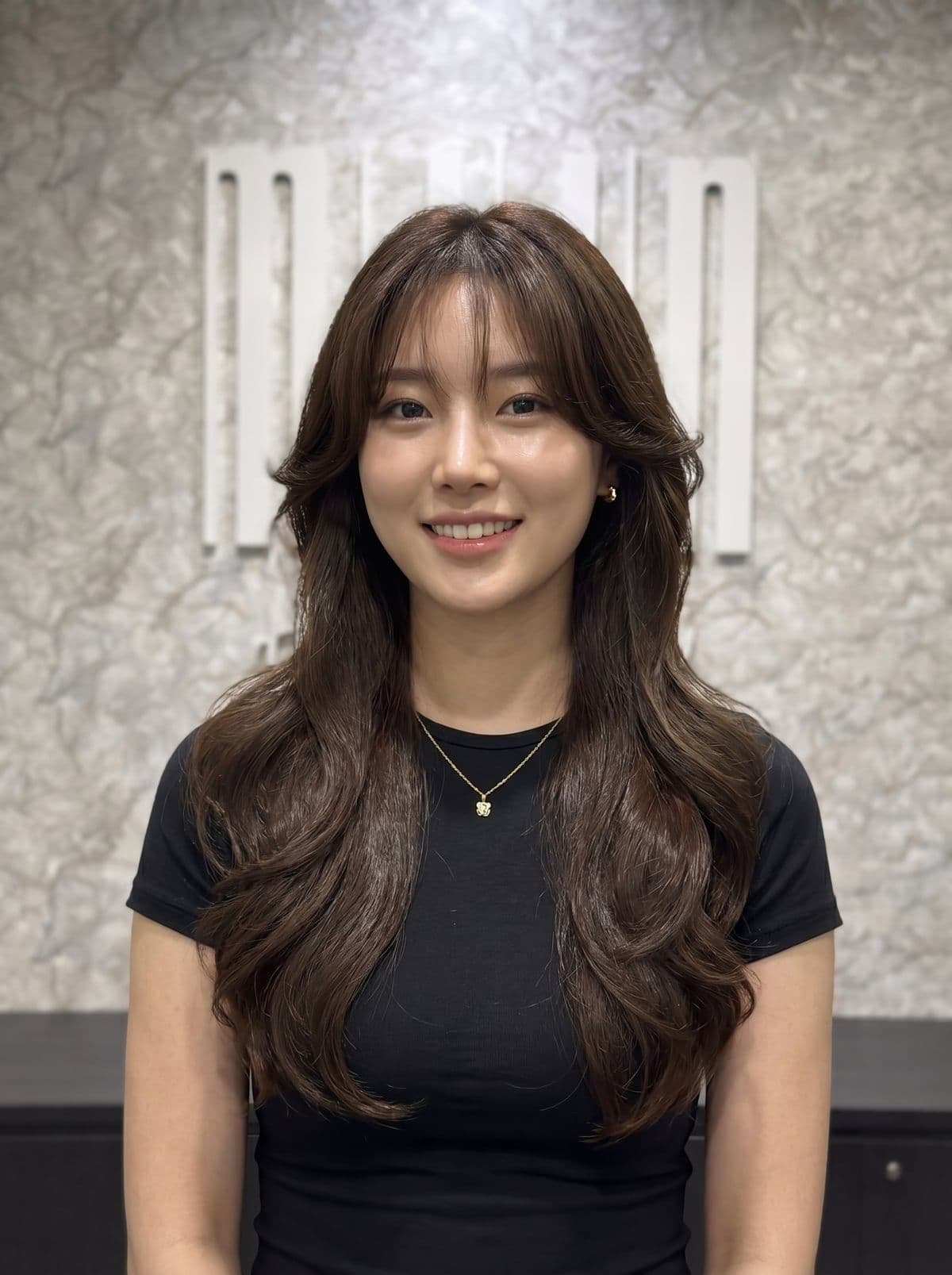
Butterfly cut
Face-framing layered haircut with a two-tier silhouette — shorter 'wing' layers at the cheekbones contrast with longer length flowing behind. Creates visible movement around the face and jaw. A classic Korean style that never goes out of trend.
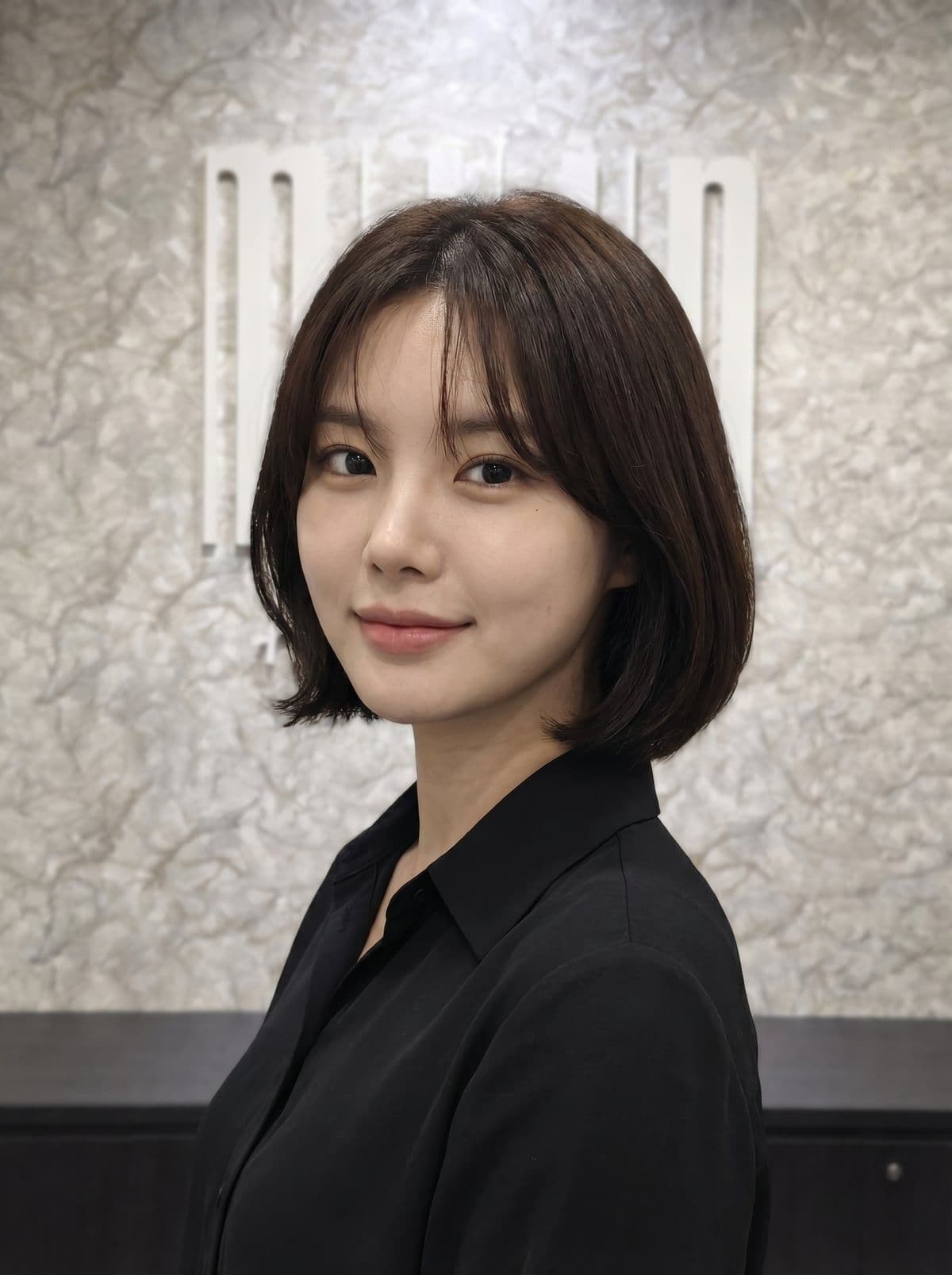
Korean bob
Jaw-to-chin length bob with soft face-framing layers and natural movement — the Korean version of a layered bob. Clean parting, sleek silhouette, easy to maintain. Pairs well with a fringe perm for added volume.
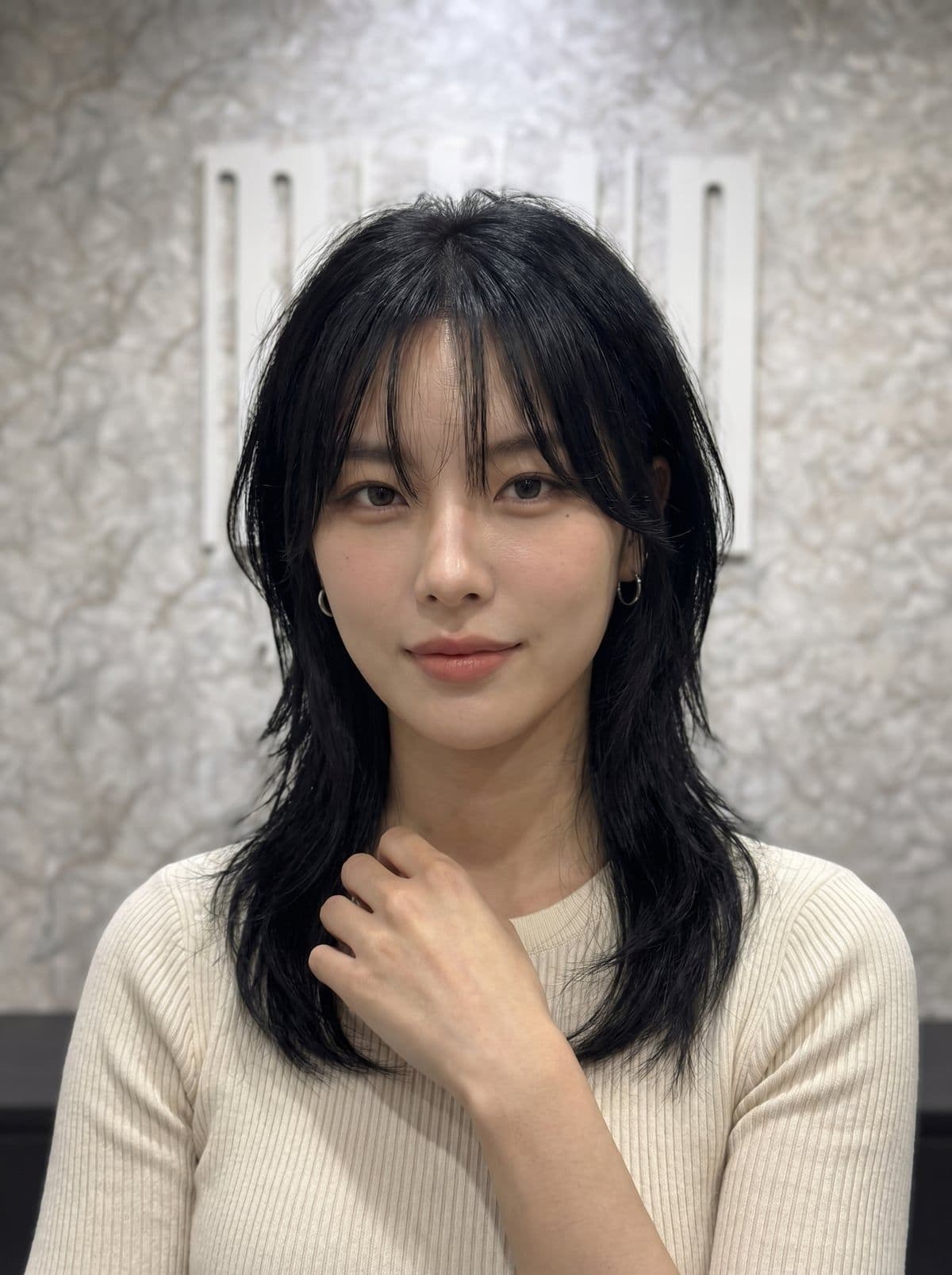
Wolf cut
Shaggy, intentionally undone layers with volume at the crown — the women's wolf cut (also known as a shag cut). Dramatic length contrast between shorter textured crown and longer shaggy ends, with wispy curtain bangs. Best at medium length.
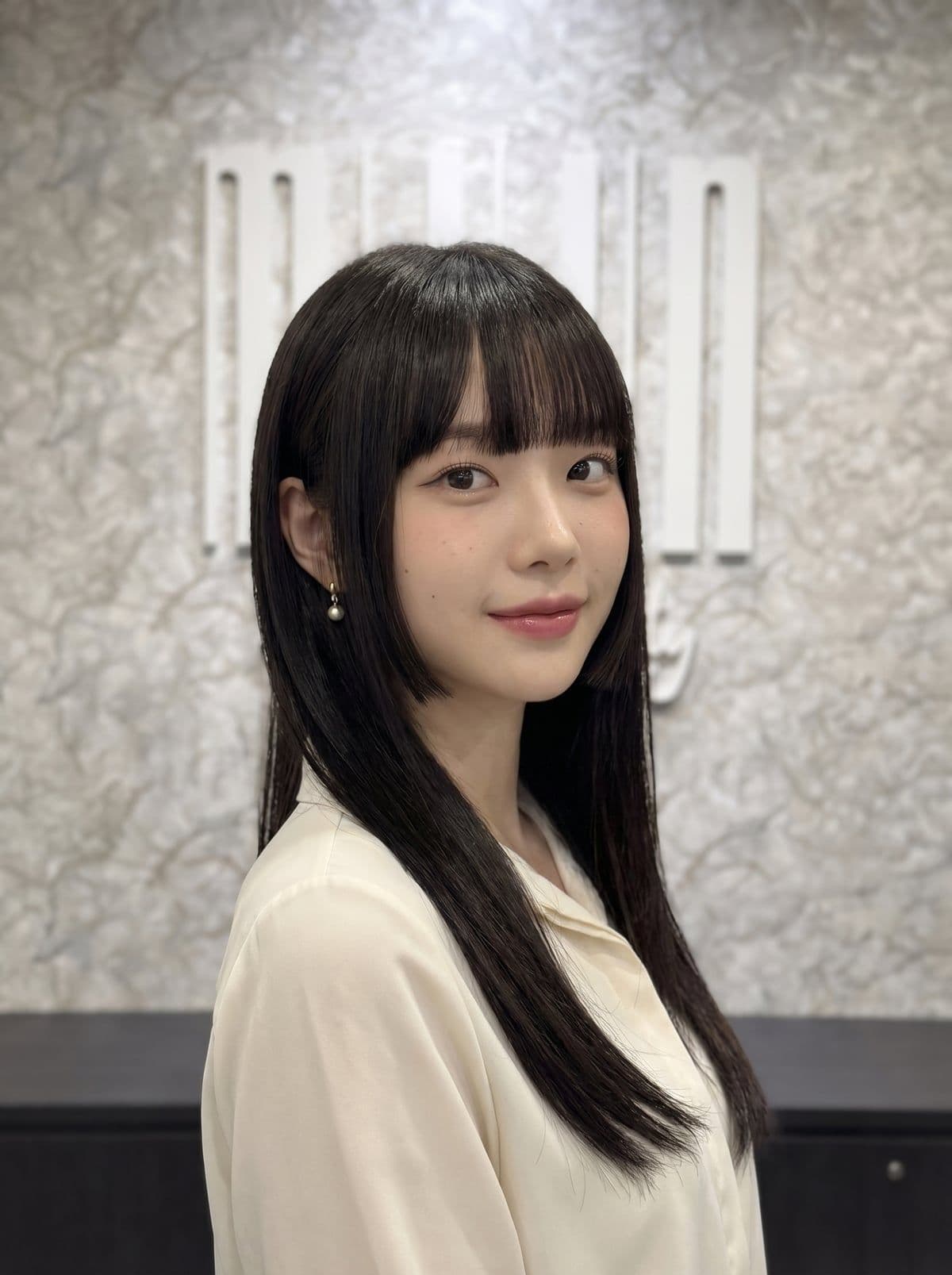
Hime cut
A geometric three-section cut with full blunt straight-across bangs, sharp cheek-length face-framing pieces, and long sleek back length. Popularised in Korea by actress Suzy in Netflix's Doona!. Structured, doll-like, editorial — the opposite of a soft layered cut.
- Curtain bangs — centre-parted fringe that sweeps outward, framing the face on both sides. Pairs with any of the cuts above. Holds its shape better with a fringe perm.
- Jellyfish cut — a choppy bob on top with longer layers underneath. Bold, distinctive, and striking.
Face shape consultation
Every Korean haircut at Miin starts with a face shape consultation. Your stylist analyses your face length, jawline, cheekbones, and forehead before making a single cut. This is what makes a Korean haircut face shape-specific rather than one-size-fits-all.
- Round face — layers positioned to elongate. Face-framing pieces that fall past the chin create a slimming effect.
- Oval face — the most versatile shape. Almost any Korean style works. Your stylist may suggest a hush cut or Korean bob to highlight your natural proportions.
- Square or angular face — soft, wispy layers around the jaw to soften strong angles. Curtain bangs work particularly well here.
- Long face — volume at the sides and shorter layers to add width. A bob with side-swept bangs balances length.
- Heart-shaped face — chin-length layers that add fullness at the jawline. Curtain bangs that cover the wider forehead.
What to expect during your appointment
A Korean women's haircut at Miin includes everything from consultation through styling — no hidden extras.
- Consultation (5–10 min) — your stylist discusses what you want, analyses your face shape and hair texture, and recommends a style. Bring reference photos if you have them.
- Shampoo — pre-cut wash with a brief scalp massage. Upgrade to a scalp treatment for a deeper cleanse.
- The cut (20–40 min) — precision cutting using Korean layering and texturising techniques. Your stylist sections the hair strategically and builds the shape layer by layer.
- Blow-dry and styling — your stylist dries and styles the cut to show you how it should look at home. They'll show you the techniques to recreate the style yourself.
- Final check — mirror check from all angles and any final adjustments.
Who is a Korean haircut for?
Anyone looking for a cut designed specifically for their face — not just their hair. Korean haircuts are particularly well-suited for:
- Thick, heavy hair that needs strategic thinning and layering to feel lightweight and move naturally
- Straight Asian hair that falls flat without proper layer placement — Korean techniques were developed specifically for this hair type
- Anyone wanting a low-maintenance cut — Korean cuts are designed to look good with minimal daily styling
- Clients who want to try a new style — your stylist can recommend what suits your face shape rather than you guessing from a magazine
- Clients pairing a cut with a perm — the cut is shaped to complement the curl pattern of a digital perm, cold perm, or fringe perm
How often should you get a haircut?
Korean layered cuts hold their shape well but benefit from regular trims to maintain the layering and movement.
For long to medium styles (hush cut, butterfly cut, wolf cut): every 6–8 weeks. The layers gradually lose definition as hair grows, and the shape starts to feel heavy.
For bobs: every 4–6 weeks. Shorter styles lose their shape faster as even a centimetre of growth changes the silhouette significantly.
For bangs/fringe: every 2–4 weeks. If you have curtain bangs or a see-through fringe, a quick trim keeps them at the right length. This can be done as a standalone fringe cut.
Korean haircuts in Singapore's climate
Singapore's humidity is precisely why a well-cut Korean haircut matters more here than in drier climates. A poorly layered cut becomes shapeless and heavy in 80–90% humidity. A properly layered Korean cut maintains its silhouette because the internal texturising removes the bulk that causes frizz and flatness.
The cut is designed to look good air-dried or with minimal blow-drying — important when you're stepping out into tropical heat. Our stylists factor Singapore's climate into every recommendation.
Pricing
Korean women's haircuts at Miin Orchard start from $58 with wash and blow included. Pricing is by stylist tier, not by hair length — the same rate whether your hair is a bob or waist-length.
The appointment takes 45–75 minutes including consultation, wash, cut, blow-dry, and styling. No hidden charges.
- Stylist — $58
- Senior — $68
- Director — $78
- Creative Director — $98
All prices nett (inclusive of GST). No additional service charge.