 WhatsApp
 Singapore
 Jakarta
- Face framing layers are shorter pieces cut specifically around the front of the face, creating a soft frame that highlights cheekbones, jaw, and eyes.
- Korean face framing is a technique-driven approach — slide cutting, point cutting, and graduated layering — that makes the layers blend invisibly into the rest of the haircut.
- The placement changes based on face shape. Longer face framing layers slim round faces; shorter layers shorten long faces; jawline layers soften square faces.
- Face framing layers are the defining feature of hush cuts, butterfly cuts, and most modern Korean women's haircuts.
- Face framing highlights (colour placed on the framing pieces) amplify the face-shaping effect even more.
Quick answer
Face framing layers are shorter pieces of hair cut around the front of the face, typically starting anywhere from cheekbone to collarbone level, that blend back into the longer length behind. They are designed to shape the face — highlighting cheekbones, softening the jaw, opening up the eyes — without being as committed as a full fringe. The Korean face framing technique uses invisible, seamless cutting to create this effect without any visible layer lines, which is why face framing haircut styles like the hush cut and butterfly cut have become so popular in Singapore and globally.
What are face framing layers?
Face framing layers are shorter sections of hair cut intentionally around the front of the face — the first inch or two of hair on either side, starting from wherever you want the framing to begin. They sit over your cheekbones, jaw, or collarbones, drawing attention to the features they overlap.
The rest of the hair — the back, the crown, the lengths behind the ears — stays at the original length. Only the front-facing pieces are layered shorter.
This is different from all-over layering, where the whole head has layers throughout. All-over layers remove weight and add volume everywhere. Face framing layers specifically shape the face.
On most modern Korean haircuts, both techniques are used together. The interior of the haircut has soft all-over layering (invisible layers, in hush cut style), and the front has distinct face framing layers that shape the face.
Face framing layers vs curtain layers vs face framing bangs
These three terms overlap and people use them interchangeably, but there are distinctions.
Face framing layers — the broadest term. Any shorter pieces cut around the face to frame it. Can part anywhere, can start at any length.
Curtain layers — a specific type of face framing layer that parts down the middle and falls on both sides like curtains. All curtain layers are face framing; not all face framing layers are curtain layers.
Face framing bangs — shorter face-framing pieces that fall around the eye or forehead level. The boundary between long bangs and short face framing layers is blurry — a long curtain bang is essentially a short face framing layer.
In practice, when you ask a Korean stylist for "face framing," they will cut layers that start around your cheekbone and blend to your main length. If you want shorter pieces at the eye level, you would ask for "face framing bangs" or curtain bangs instead.
What is Korean face framing?
Korean face framing is a technique, not a specific hairstyle. Korean stylists are trained in cutting methods that create face framing layers with invisible, blended edges — rather than the more obvious, sharper layers of Western salon cuts.
The three core techniques:
Slide cutting — the scissors glide down the length of a section rather than snipping across. This creates a tapered, seamless finish. Used to blend face framing layers into the main length.
Point cutting — the scissors cut into the hair vertically rather than across, removing weight in tiny, piece-y increments. Used on the ends of face framing layers to create softness.
Graduated layering — each face framing layer is slightly shorter than the one below it, but the difference is small enough that you cannot see where one layer ends and another begins. Used to create the smooth, sweeping shape of Korean curtain layers.
The result is face framing that looks like the hair just grows that way — beautifully shaped around the face without any visible cutting lines. This is why Korean face framing is the signature look of hush cuts, butterfly cuts, and most modern Korean women's hairstyles.
Face framing layers by face shape
The real power of face framing layers is that the same technique can flatter very different faces, just by changing where the layers start and how they fall.
Round face
Placement: longest face framing layers fall below the jaw or at the collarbone. Shortest framing pieces can start at the cheekbone if you want shape around the cheeks.
The goal for a round face is elongation. Face framing layers that end below the jawline create vertical lines that lengthen the face visually. Avoid layers that end exactly at the cheek level — this adds width.
A hush cut with long curtain layers is one of the most flattering combinations for round faces.
Oval face
Placement: anywhere works. You can start layers at the cheekbone, jawline, or collarbone — all placements flatter the oval face.
The oval face is the most versatile canvas for face framing. Your stylist will recommend placement based on which features you want to highlight rather than which ones to balance.
Square face
Placement: shorter face framing layers that end at the jawline, softening into longer pieces behind.
Square faces have strong jaw angles, and the goal is to soften them. Face framing layers that fall across the jawline break up the harsh lines and create a gentler frame. Avoid layers that end exactly at the shoulders or below — this accentuates the jaw angle.
A face framing haircut for square faces usually includes a soft curtain bang as well, which balances the forehead.
Long face
Placement: shorter face framing layers starting at the cheekbone or chin, adding width at the middle of the face.
Long faces benefit from horizontal width to balance the vertical length. Face framing layers that add volume and shape around the cheekbones widen the face visually. Pair with face framing bangs for even more width.
Avoid very long face framing layers that extend past the chin — they elongate the face further.
Heart-shaped face
Placement: face framing layers that start at the jaw and extend to the collarbone, widening the chin area to balance a wider forehead.
Heart-shaped faces are narrower at the chin and wider at the forehead. Face framing layers that add softness and width around the jaw and chin balance the proportions. Long curtain layers that sweep inward at the chin are especially flattering.
Face framing layers and hush cut / butterfly cut
Face framing is the defining feature of the hush cut and butterfly cut — the two most popular Korean women's haircuts right now.
Hush cut and face framing — the hush cut is built on invisible, blended layers throughout. The face framing is the most visible part of the cut because it sits at the front, but even there, the layers use slide cutting and point cutting to blend seamlessly. The result is face framing that looks like natural movement, not like a haircut.

Butterfly cut and face framing — the butterfly cut has a more visible, structured silhouette with two tiers of layers. The face framing is the shorter, more dramatic tier — the pieces that create the "butterfly wing" shape at the front of the face. On a butterfly cut, the face framing is more pronounced and intentional than on a hush cut.
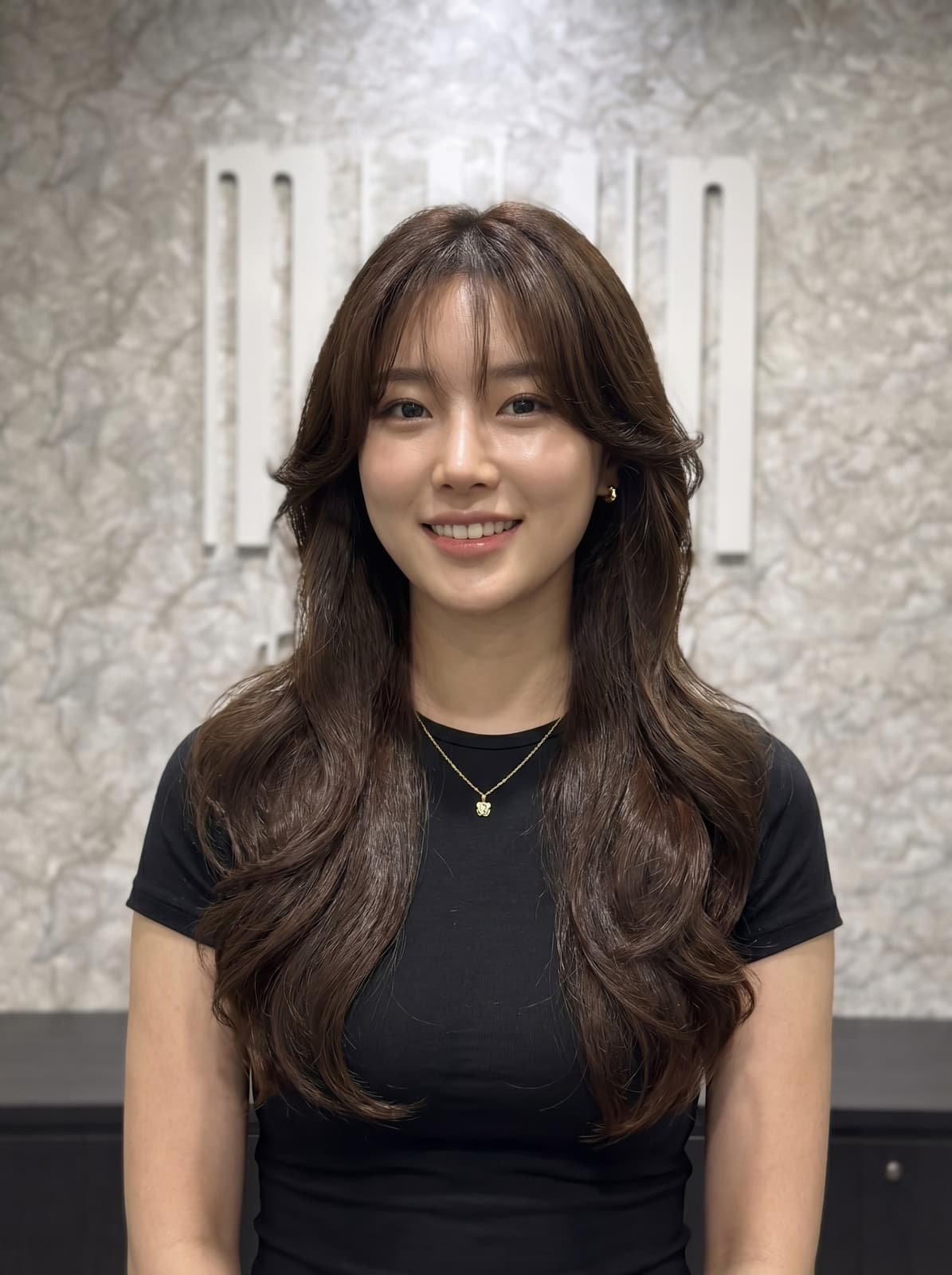
Both styles rely on Korean face framing technique, but the butterfly cut shows off the framing while the hush cut hides it. If you want subtle, choose a hush cut with face framing. If you want visible, choose a butterfly cut with face framing.
Face framing highlights
Face framing highlights are colour highlights placed specifically on the face framing layers. The brighter pieces catch the light and draw attention to the features the framing is already highlighting.
Face framing highlights work because:
- The lightest pieces sit where people look first — around the face
- The contrast between the lighter framing and the darker main length makes cheekbones pop
- The highlights brighten the complexion without requiring full colour
Popular face framing highlight styles:
- Soft balayage face framing — subtle, sun-kissed pieces that blend into the natural colour
- Money piece highlights — brighter, more visible highlights at the very front pieces for a bolder effect
- Ombre face framing — face framing layers dipped in lighter colour from the midlengths down
At Korean salons, face framing highlights are placed with Korean colour techniques that avoid the harsh stripes of older Western highlighting methods. The result is dimensional, lived-in colour that enhances the face-framing effect.
Still deciding between highlights and balayage for your face-framing pieces? Read our highlights vs balayage guide for the technical and visual differences. Once coloured, our hair colour maintenance guide covers how to keep the colour vivid in Singapore's humidity.
Face framing on different hair lengths
Long hair
Face framing layers on long hair are the most dramatic. The layers can start anywhere from cheekbone to collarbone and still have plenty of length behind them. This is the classic K-drama leading-lady look — long flowing hair with shorter, sweeping pieces framing the face.
Medium hair
On shoulder to collarbone length hair, face framing layers create a clean, polished silhouette. The shorter face framing pieces make medium hair look more intentional and less "in-between."
Short hair
Face framing on short hair is the most nuanced. With less length to work with, the layers need to be placed precisely to avoid looking choppy. On a Korean bob or a short hush cut, face framing usually takes the form of shorter pieces around the chin or cheekbone that blend into the main length.
How to style face framing layers in Singapore
Face framing layers are most visible when they are smooth and shaped. Singapore's humidity fights this, but a few techniques make it manageable.
Minimal routine (5 minutes): apply a light anti-frizz serum only to the face framing pieces. Air-dry the rest. Use a flat iron or curling iron on just the framing pieces to set the shape — 30 seconds per side.
Polished routine (10 minutes): blow-dry the entire head, paying extra attention to the face framing pieces. Use a medium round brush to curve the framing away from the face. Finish with a light hairspray.
For wavy hair: scrunch a light texturiser into damp hair and let the framing layers air-dry into gentle waves. The Korean face framing technique creates framing that looks great both straight and wavy.
To lock the shape long-term: consider a light cold perm on just the face framing pieces. This sets a subtle curve into the framing layers that humidity cannot disrupt. It is a very low-commitment perm because it only affects the front pieces, not the full head.
How to maintain face framing layers
Trim schedule: every 8-10 weeks for the full haircut. Some clients book a quick face-framing trim every 4-6 weeks to keep the shortest pieces at the exact length they want — this is a 15-minute service between full cuts.
Grow-out strategy: Korean face framing grows out very gracefully because the layers are soft and blended. As they grow, they naturally become longer face-framing layers, then eventually transition into the main length. There is no awkward phase.
If you get face framing highlights: the colour typically needs refreshing every 10-12 weeks depending on your hair growth and how dramatic the highlights are.
Where to get face framing layers in Singapore
Face framing looks deceptively simple — just shorter pieces around the face. But the difference between a good face framing haircut and a great one comes down to technique. Korean face framing uses slide cutting, point cutting, and graduated layering in precise ways that take years to master.
At Miin in Orchard, every Korean women's haircut includes customised face framing as a standard part of the consultation. Your stylist will assess your face shape, identify which features to highlight, and place the face framing layers to achieve that effect. Whether you want the subtle face framing of a hush cut, the pronounced framing of a butterfly cut, the edgier frame of a wolf cut, or a simple face framing refresh on your existing haircut, the Korean technique makes the difference.
For additional dimension, face framing highlights pair beautifully with any face framing haircut — the colour amplifies the shape, creating a layered, brightened look around the face that photographs beautifully in any light.