 WhatsApp
 Singapore
 Jakarta
What is single-tone colour?
Single-tone colour (also called one-process or all-over colour) applies one uniform shade from roots to ends. Unlike highlights or balayage that create multi-tonal dimension, single-tone colour changes your entire base — giving you a clean, consistent result.
It's the most common hair colour service and the foundation of most colour work. Whether you want to go darker, warmer, cooler, or cover grey, single-tone colour is the starting point. At Miin, we treat it as more than just application — your stylist selects the exact formula to suit your hair's condition, your skin tone, and the way colour develops on Asian hair specifically.
How Korean hair color differs
Korean colour philosophy prioritises natural-looking results and hair health over dramatic transformation. Rather than pushing for maximum lift or bold fashion shades, the Korean approach focuses on soft, flattering tones that enhance your features without obvious artificiality.
At our hair colour salon in Orchard, this translates to a few practical differences in how we work.
- Tone-first thinking — Korean stylists choose shades based on how they interact with your skin tone, not just what's trending. Ash brown, chocolate, olive brown, and cool beige are popular because they suit East and Southeast Asian complexions.
- Gentle formulations — We use low-ammonia or ammonia-free colour lines where possible, reducing damage while still achieving even coverage and lasting results.
- Shine as a priority — Korean hair color aims for a glossy, healthy finish. Flat or matte results are considered a sign of damage, not style. Post-colour treatments lock in moisture and shine.
- Subtle shifts, not shocks — Going 1–2 shades from your natural base gives the most natural result. Bigger shifts are possible but are approached carefully, often over multiple sessions.
Hair colour on Asian hair: what to know
Asian hair is thicker and darker than most hair types, which affects how colour develops. That's why choosing the right Asian hair color formula matters. Dark hair tends to pull warm (orange, copper) when lightened, so our stylists adjust formulas and processing times to keep your tone clean and even — no brassiness, no patchiness.
Popular colour shades at Miin
These are the most requested no-bleach shades at our Orchard salon. All work on natural dark Asian hair without pre-lightening, and can be customised to your skin tone during consultation.

Chocolate Brown
Classic warm dark brown with rich cocoa depth. The safest upgrade from natural black — office-appropriate, K-drama classic. Reveals warm chocolate richness in sunlight.

Mocha Brown
Espresso with a splash of milk. A muted coffee-neutral brown that sits between warm and cool — sophisticated and low-key. No obvious undertone.

Chestnut Brown
Rich brown with a warm auburn flash in direct light. The K-drama heroine in autumn shade — warm, dimensional, and flattering on warm skin tones.
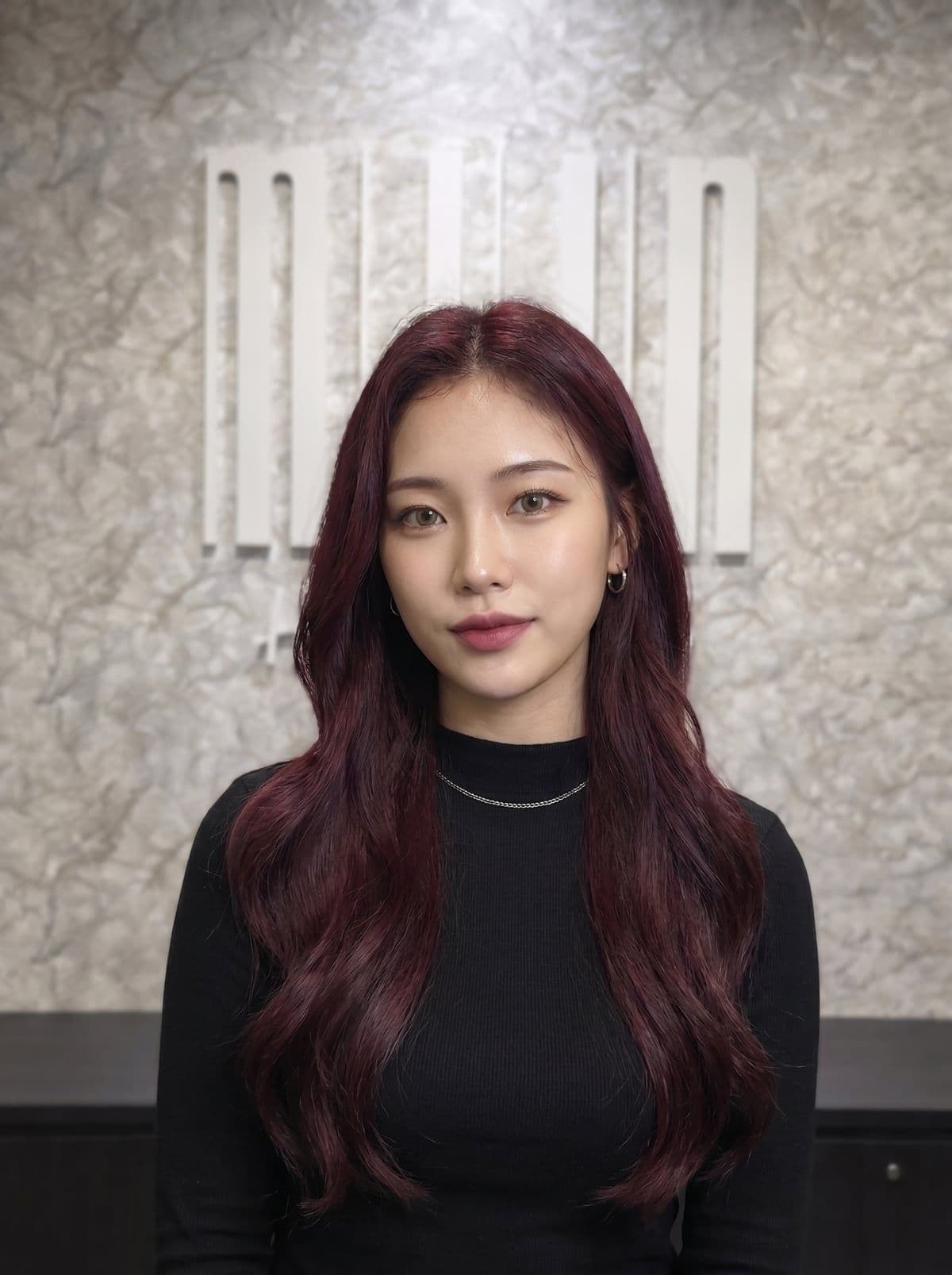
Burgundy
Deep wine-red brown that brings brightness to your face. Bold but classy — the statement shade. One of the best no-bleach options for dark Asian hair.
- Olive brown — Green-tinted brown that neutralises red undertones. Flattering on warm skin tones and grows out softly.
- Dark beige / greige — A grey-beige hybrid between ash and warm brown. Trending in Korean salons for its understated, editorial feel.
Lighter shades with pre-lightening
Shades lighter than your natural dark Asian hair — milk tea, butter blonde, ash brown, dusty pink — require bleaching as a pre-lightening step before the colour is applied. Cool and ash-based shades also need a toner afterward to neutralise the yellow or orange undertones that surface during lift. Warm shades (honey, copper) can sometimes skip toner, but most of the popular Korean editorial shades below land cleaner with both.
These are two-step services: bleach first, then single-tone colour. Your stylist will assess your hair's current condition, colour history, and target shade during consultation — some darker bases take two lightening sessions to reach a clean base for these shades.
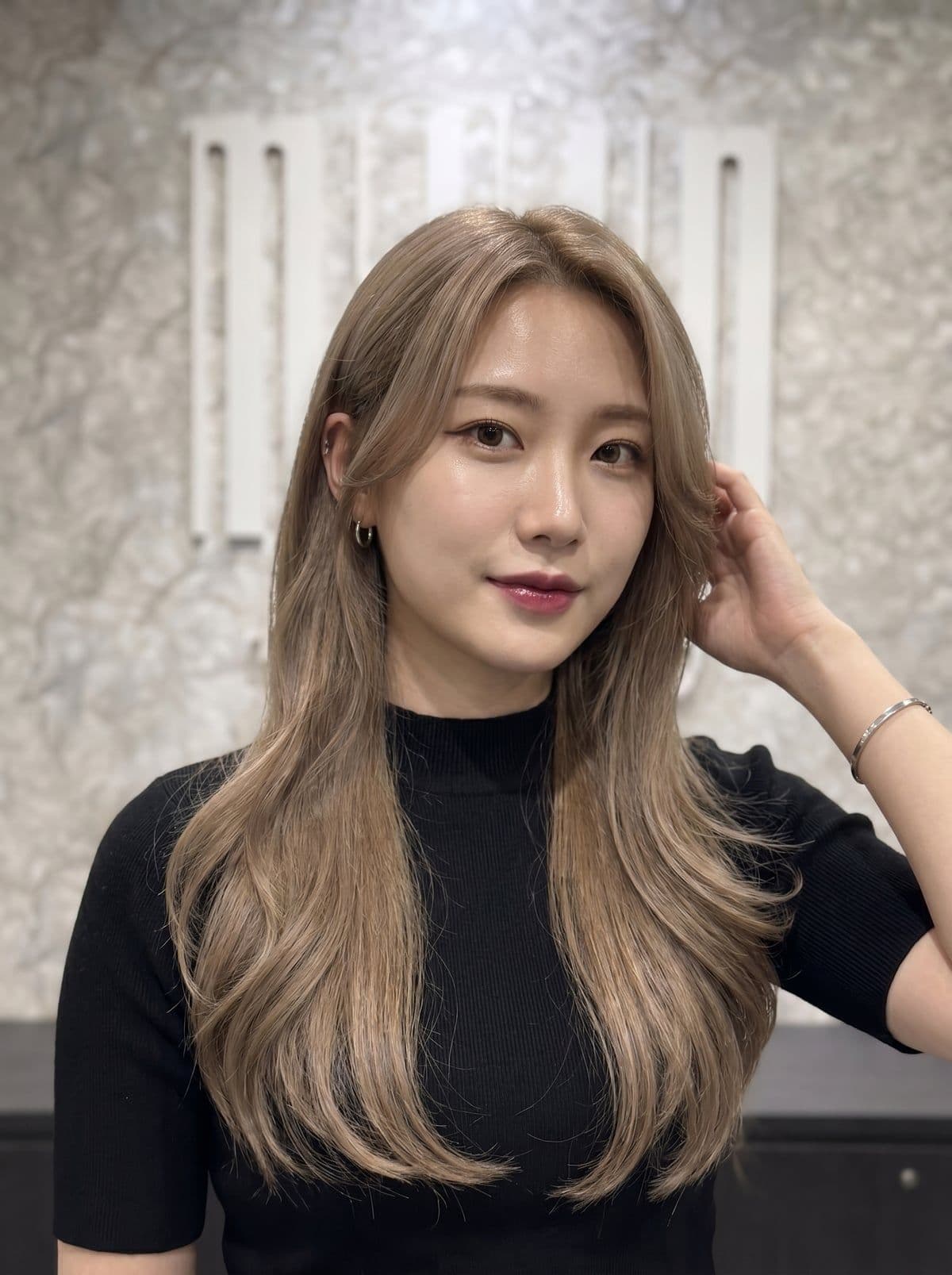
Milk Tea
Creamy neutral light brown with warm beige undertones — the signature Korean bleached shade. Also called milk tea brown, latte brown, or beige brown. Pre-lightening opens the base so the milk-tea toner can deposit evenly, creating a soft latte-like finish. A K-pop and K-drama editorial staple.

Butter Blonde
Bright creamy light blonde with a cool-neutral platinum lean — the editorial butter-blonde trend from Seoul. Soft, luminous, expensive-looking. Needs heavier pre-lightening (sometimes two sessions on very dark hair) plus a violet toner to cancel yellow and lock in the buttery finish. Not the same as warm golden blonde.
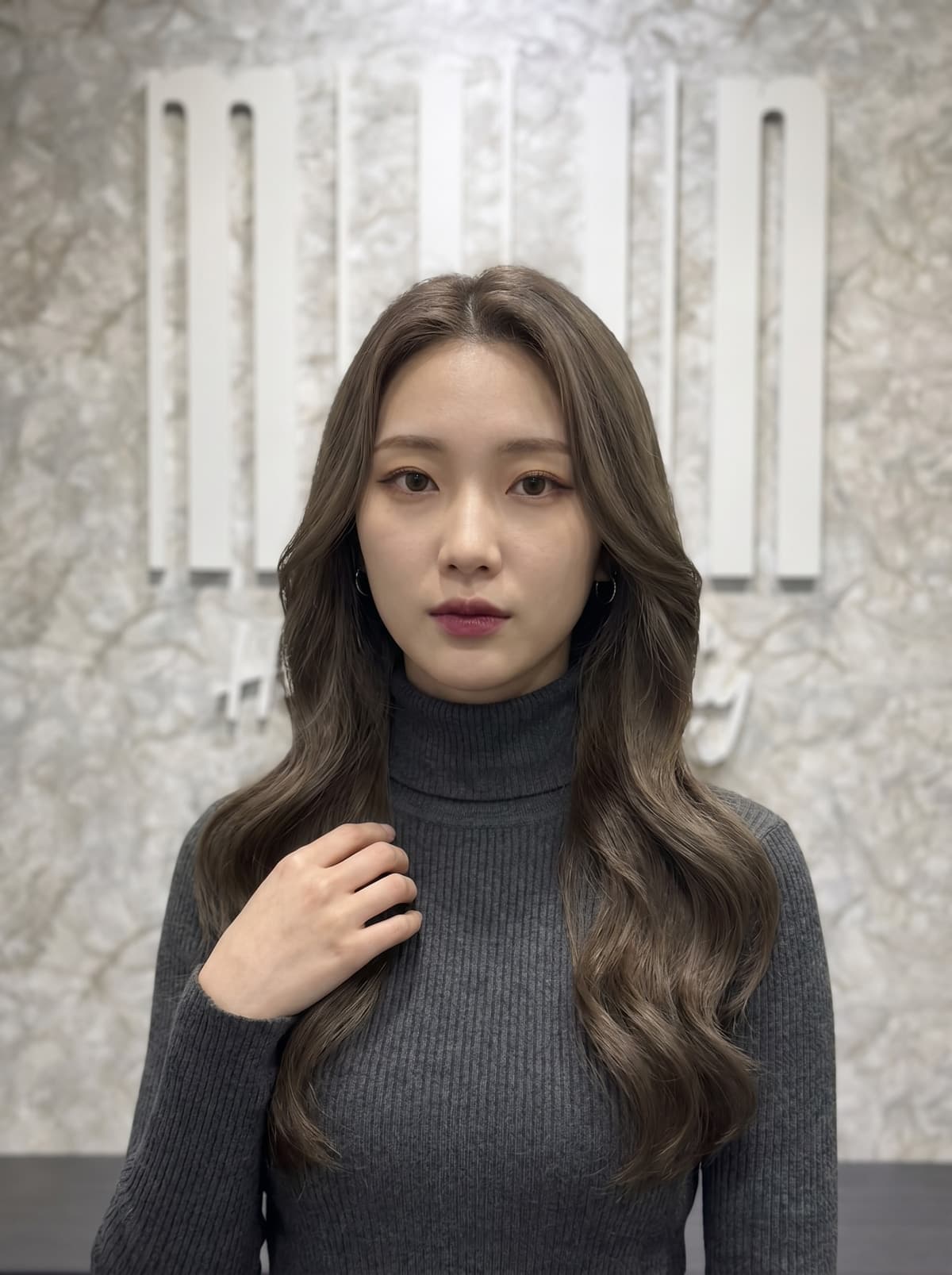
Ash Brown
Medium-dark cool brown with a smoky ash finish — often called K-pop ash brown. Cancels the warm yellow and red undertones that Asian hair naturally reveals when lightened, delivering a true cool smoky quality. One bleach session plus an ash-toned toner are required for clean colour pay-off.
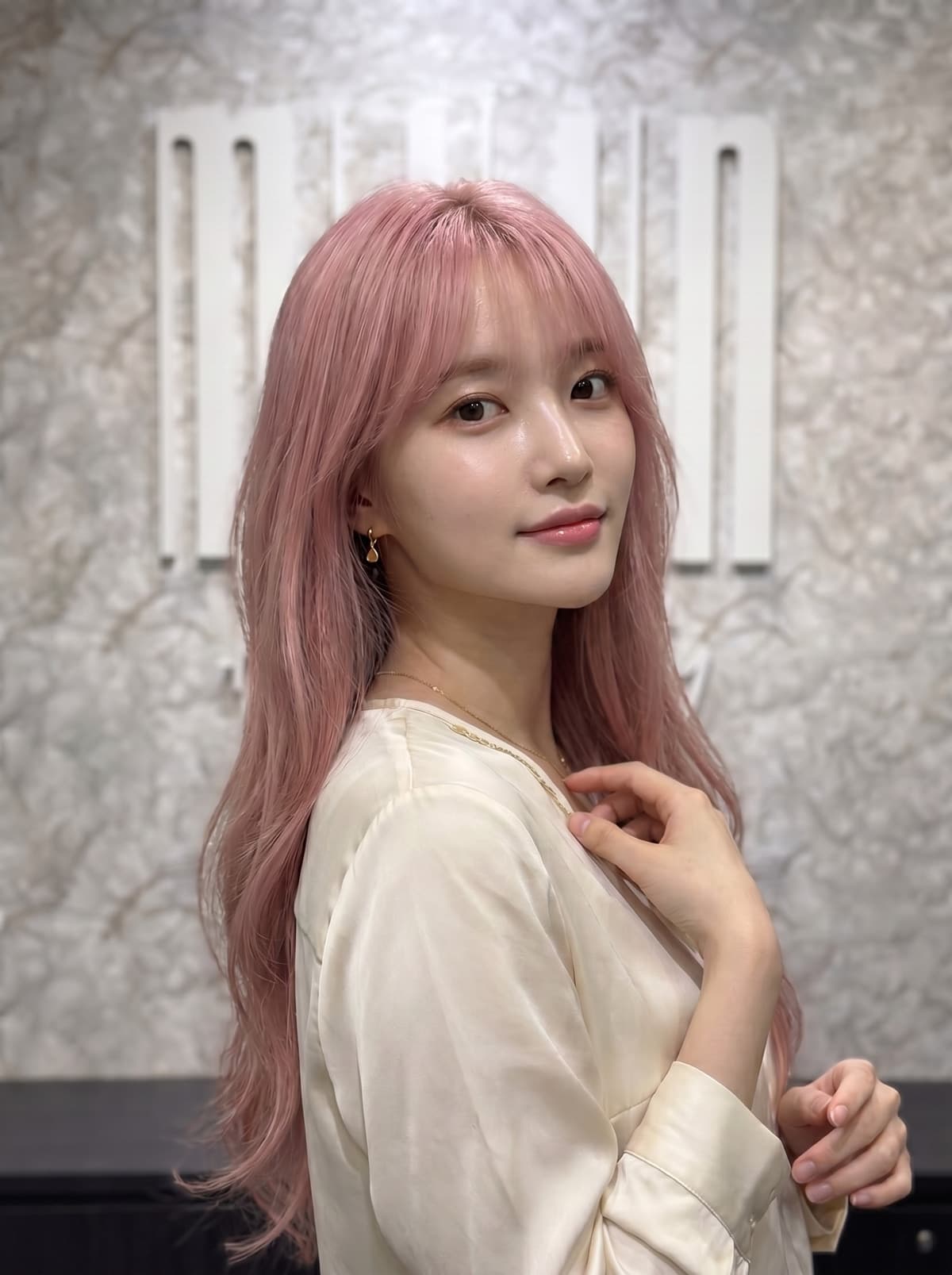
Dusty Pink
Soft muted rose-pink — also known as dusty rose or rose pink. A low-saturation pastel-adjacent shade inspired by K-pop and Japanese editorial looks. Pre-lightening clears the base, then a rose-pink toner deposits the dusty tone evenly. Fades gracefully into soft blonde over 6–8 weeks, so grow-out stays wearable.
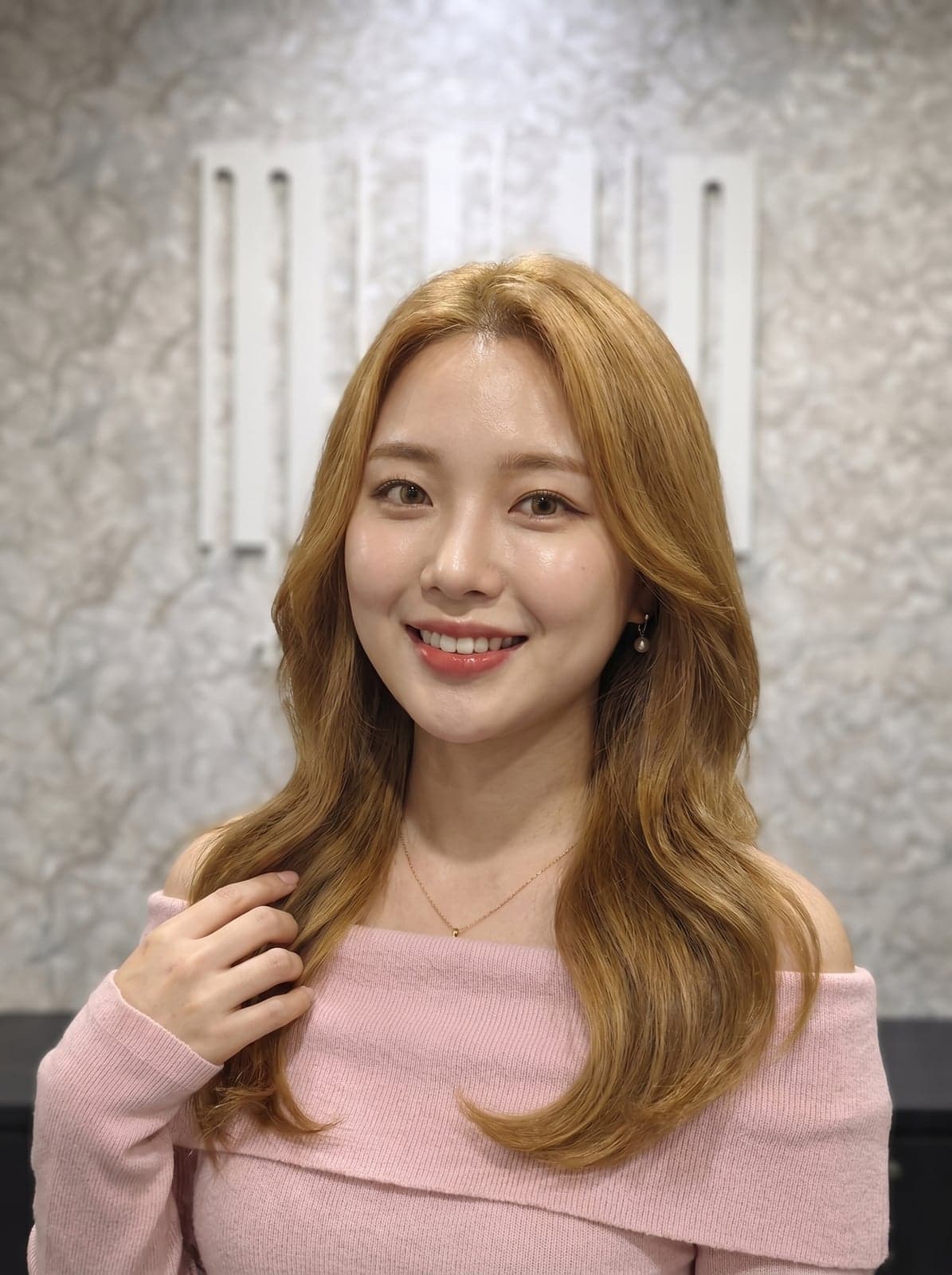
Honey Blonde
Warm golden-blonde with rich honey depth — like clover honey or warm caramel-honey. Sits between Milk Tea (cooler/creamier) and Butter Blonde (cooler/lighter) on the warm side. Pre-lightening opens the base, then a warm gold toner deposits the honey tone. The friendliest of the warm bleached shades — flattering on most skin tones.
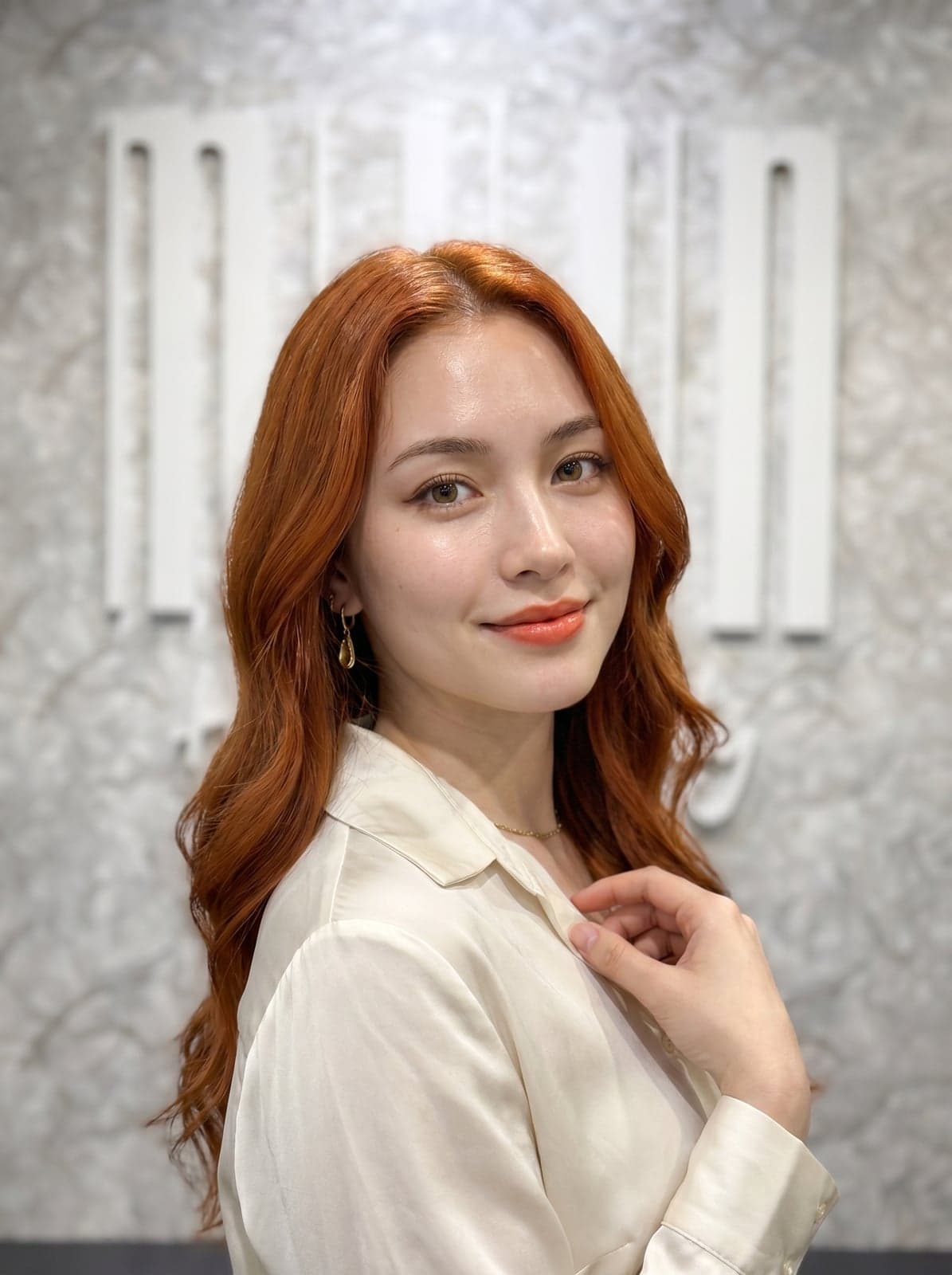
Copper
Warm reddish-orange with rich autumn-leaf depth — like a fresh penny or a warm autumn maple leaf. One of the few warm bleached shades that often skips toner since the warmth IS the look. One bleach session opens the base; copper colour deposits directly. A bold statement shade that flatters warm and neutral skin tones.
What to expect during your appointment
A single-tone colour appointment at Miin follows a careful, structured process.
- Consultation — Your stylist examines your hair condition, discusses your colour history, and helps you choose a shade. If you have reference photos, bring them — it's the clearest way to communicate what you want.
- Strand test (if needed) — For previously coloured or chemically treated hair, a test strand ensures even, predictable results.
- Application — Colour is mixed fresh and applied evenly from roots to ends (or roots-only for a retouch). Your stylist monitors processing to ensure the right depth and tone.
- Processing — Colour develops for 20–40 minutes depending on the formula, your hair type, and the target shade.
- Rinse and post-colour treatment — Colour is rinsed, followed by a finishing treatment that locks in colour and shine.
- Blow-dry and styling — Your stylist styles your hair so you can see the final result in its best light.
Single-tone colour vs highlights or balayage
The right choice depends on what you're after.
- Single-tone colour — One uniform shade. Best for covering grey, changing your base, or refreshing faded colour. Even, consistent result.
- Highlights — Foil-applied lighter pieces for structured dimension. Adds contrast without changing your entire base.
- Balayage — Hand-painted gradient for a natural, sun-kissed effect. Low-maintenance grow-out.
Aftercare: keeping your colour lasting
Proper aftercare makes your hair dye last longer and keeps colour looking fresh between appointments.
- Wait 48 hours before washing your hair after colouring
- Use colour-safe, sulphate-free shampoo — sulphates strip colour molecules and dry out hair
- Avoid hot water when washing — lukewarm or cool water preserves tone
- Limit heat styling; when you do, use a heat protectant
- UV exposure fades colour — wear a hat or use UV-protective hair products in Singapore's sun
- Book a Miin Express treatment or Miin Signature treatment every 4–6 weeks to maintain condition and shine
How often does colour need refreshing?
Single-tone colour typically lasts 4–6 weeks before visible root regrowth appears. The exact timing depends on how fast your hair grows and how much contrast there is between your natural base and the coloured shade.
Between full colour appointments, a root colour touch-up covers new growth without reprocessing the lengths — keeping colour fresh while minimising cumulative damage.