 WhatsApp
 Singapore
 Jakarta
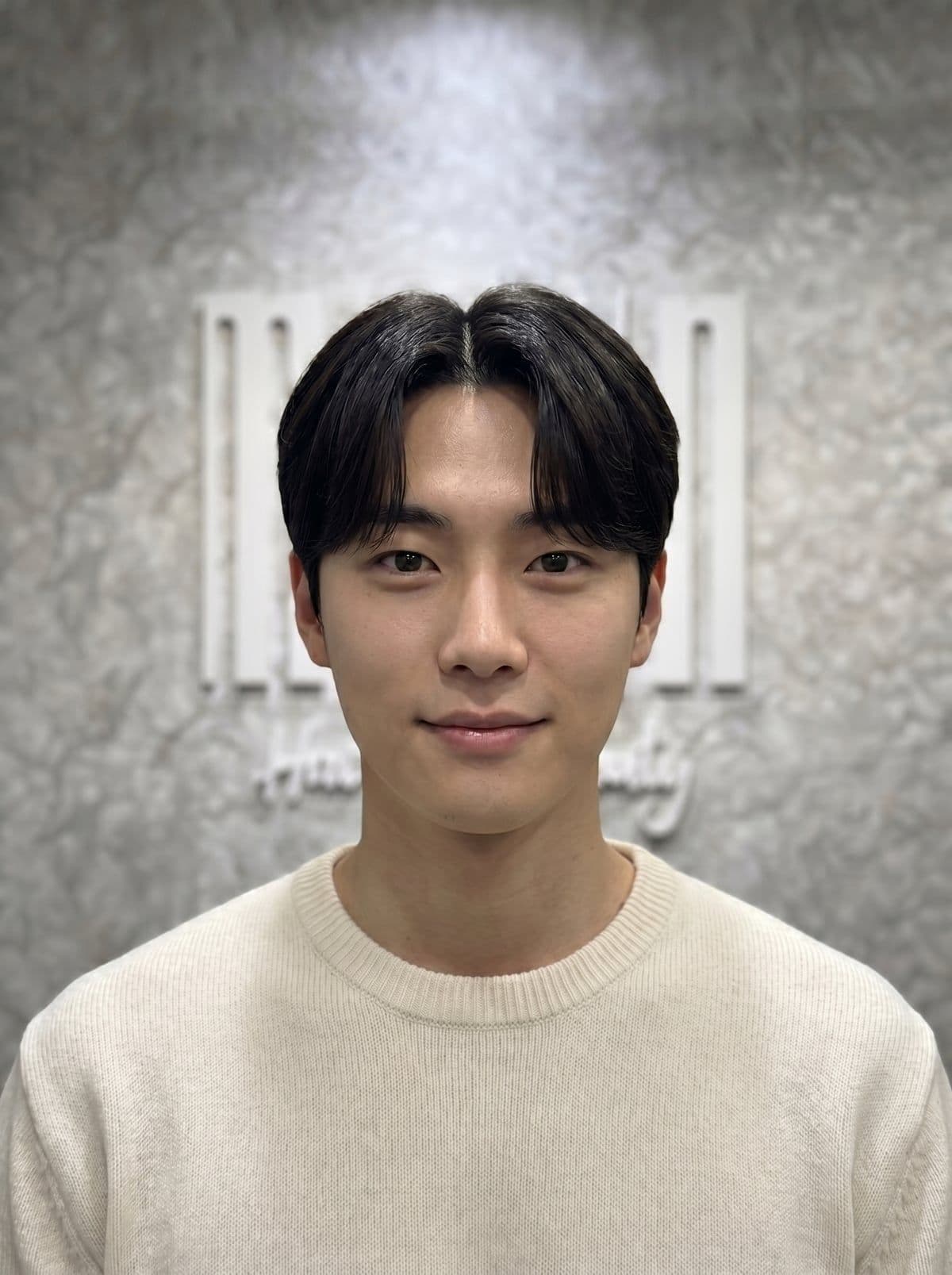
- The comma haircut (also called the comma cut) is a Korean men's hairstyle where the fringe is styled to curve like a comma — the signature K-pop and K-drama male lead look.
- It is almost always combined with a two block haircut (short sides, long top), creating the two block comma cut — the most requested Korean men's haircut globally.
- The comma hair shape works on most face shapes and is especially flattering on thick Asian hair.
- In Singapore's humidity, a cold perm is the practical way to keep the comma shape in place without daily styling.
- The comma hair cut is low-maintenance when permed and requires just a quick trim every 3-4 weeks to keep clean.
Quick answer
A comma haircut (also called the comma cut or Korean comma haircut) is a Korean men's hairstyle where the fringe is shaped into a curve that resembles a comma punctuation mark. The hair sweeps away from the forehead and hooks back at the ends, creating a soft, rounded frame around the face. It is almost always worn on top of a two block haircut — short sides and back, longer top — which produces the signature "K-pop idol" silhouette. The comma hairstyle is the most recognisable men's haircut to come out of Korea in the last decade, and the comma hair men wear today has become the default request at Korean salons worldwide.
What is a comma cut?
The comma cut gets its name from the shape the fringe forms when styled — a soft curve that looks like the comma character. The fringe is long enough to sweep up and away from the forehead, then falls back down with a slight hook at the tips. When you look at the side of a comma cut, the fringe outline traces the exact shape of a comma.
The comma hair cut is fundamentally a styling technique applied to a specific haircut — usually a two block. The cut provides the length and shape; the styling creates the comma. This is why the same haircut can be worn as a comma cut one day and a middle part the next.
The comma cut originated in Korea in the early 2010s and exploded globally through K-pop. Groups like EXO, BTS, and Stray Kids popularised the look, and K-drama leads cemented it as the signature Korean male hairstyle. Today, walk into any Korean salon worldwide and the comma cut is the most requested men's style.
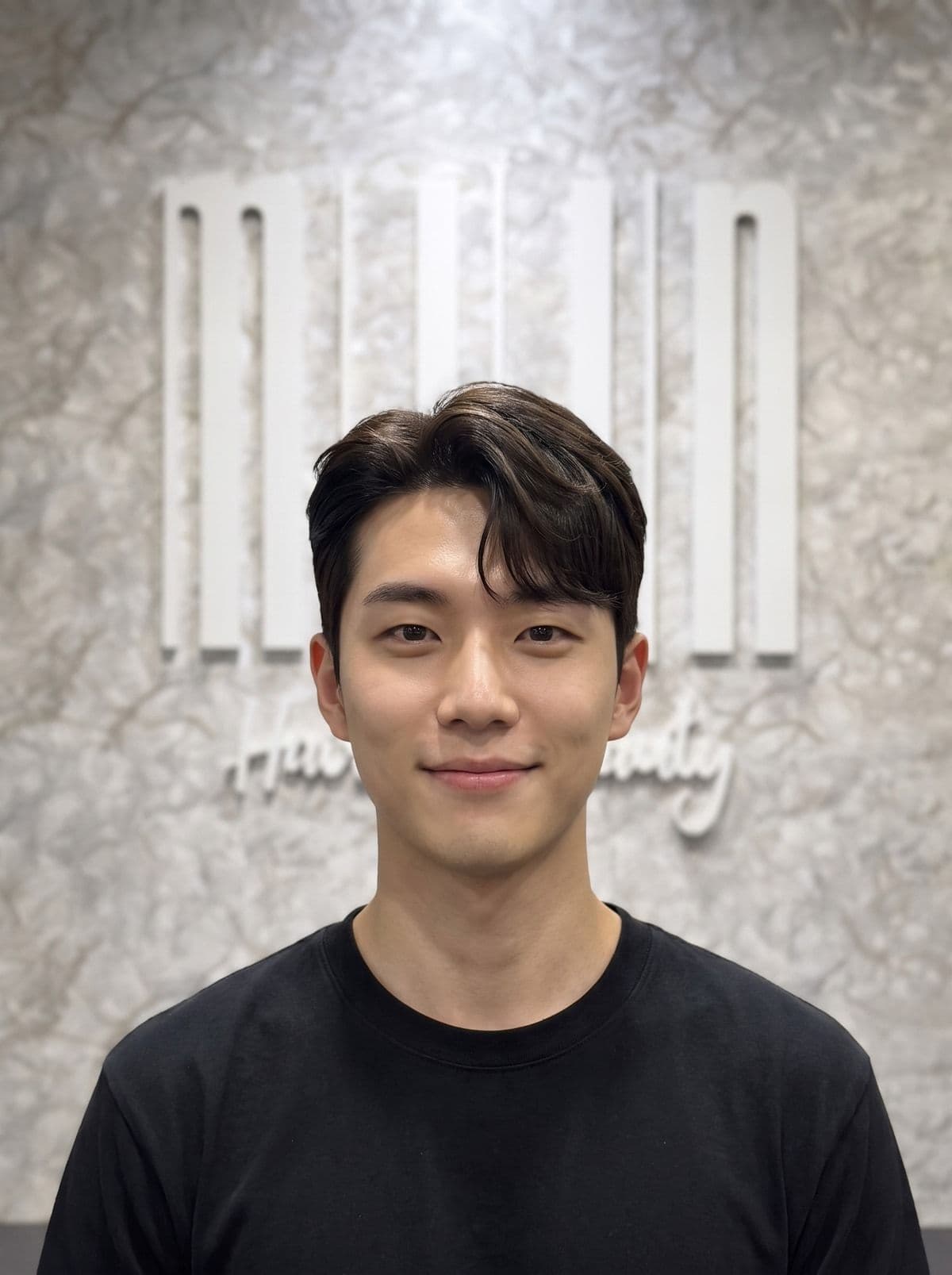
The two block comma cut — why they go together
The comma cut almost always sits on top of a two block haircut. The combination — two block comma cut — is so common that many clients use the terms interchangeably.
Here is why the two pair so well:
- The two block provides the foundation — short sides and back keep the silhouette clean
- The comma cut provides the style — the long top is shaped into the signature curve
- The contrast amplifies both — the short sides make the comma fringe stand out more; the comma styling makes the two block look more intentional
If you want to know the one haircut K-pop idols get the most, it is the two block comma cut. Almost every Korean men's haircut you see on television or on stage is this combination. You can book a comma cut at our Korean men's hair salon in Orchard, where your stylist shapes the two block foundation and the comma fringe to suit your face.
How to ask for a comma cut at a salon
Bring a reference photo. Korean hairstyles rely on specifics — length, transition style, fringe shape — and a photo removes all guesswork. Save a screenshot of a K-pop idol or K-drama actor with the exact comma hair shape you want.
At a Korean salon, just say "comma cut" or "comma hair." Your stylist will know the look and ask you about the details — top length, side length, fringe length, fade versus taper.
At a general barber, give them three things:
- Short sides and back — specify tapered (scissors, soft transition) or faded (clipper, gradual skin fade). A Korean comma cut usually uses a soft taper rather than a hard fade.
- Long top — at least 4-6 inches long so the fringe is long enough to curve into the comma shape. The nose-bridge length fringe is ideal.
- Fringe styled in a curve — explain you want the fringe swept up and away from the forehead, curving back at the tips like a comma.
Ask about a perm. In Singapore's humidity, most clients who get a comma cut also get a cold perm. If your stylist does not bring it up, ask — it changes how easy the cut is to maintain. (Our Korean perm guide covers how each perm type works.)
Styling a comma cut
The comma hair shape is created with a blow-dryer and a small round brush. Here is the technique Korean stylists teach.
Step 1 — start with damp hair. Towel-dry until no water is dripping. The hair should be damp, not wet.
Step 2 — apply a light styling product. A matte clay or texture cream works. Apply a small amount to your fingertips and work through the damp top section. Avoid the roots — product at the roots flattens the comma shape.
Step 3 — blow-dry the fringe away from the face. Point the dryer at the roots of the fringe and direct the airflow up and back. Use your fingers or a small round brush to lift the fringe away from the forehead.
Step 4 — set the comma curve. As the fringe dries, use the round brush to curve the ends back toward the face. The motion is: up from the root, out away from the forehead, and back with a slight hook at the tips. This creates the comma shape.
Step 5 — set with light hairspray. A fine-mist hairspray locks the shape. Avoid heavy hairsprays — they make the comma look stiff.
Daily styling time: 5-10 minutes without a perm. With a perm, this drops to 2 minutes (towel-dry, scrunch a little product in, the comma forms itself).
Comma cut and perm — the Singapore solution
Singapore's humidity is the main enemy of any styled men's haircut. The comma shape relies on the fringe holding a specific curve, and humidity pulls that curve flat fast.
A cold perm solves this completely — or if you only want the fringe permed (not the whole top), a dedicated fringe perm shapes just the front into the exact comma curve. Either way the shape becomes permanent for 3-6 months. Every morning, you just towel-dry, scrunch in a light product, and the comma appears on its own.
The cold perm + comma cut combination is one of the most popular services at Korean salons in Singapore specifically because it turns a styling-intensive look into a wash-and-go style. For most clients, this is worth it within the first week.
A digital perm is also an option, but cold perms are better for men's hair because they create soft, natural-looking waves rather than tighter, more obvious curls. For a full overview of men's perm options, see our Korean perm for men guide.
Comma cut by face shape
Round face — the comma cut works well because it adds vertical height at the root (lifting the fringe up) and creates a soft frame around the face. Keep the top slightly longer to elongate the face further.
Oval face — the most versatile shape. Any comma cut variation works. Try the classic two block comma cut for the default K-pop look.
Square face — the comma hair shape softens an angular jawline. The curve of the fringe visually counteracts sharp features. Avoid very short comma cuts — a medium to long fringe creates the softness you want.
Long face — a comma cut with a shorter top balances the vertical length. Avoid adding too much height at the crown. A side-parted comma cut (where the fringe sweeps more to one side) works better than a symmetrical one for long faces.
Heart-shaped face — the comma cut's face-framing curve softens a wider forehead. A slightly asymmetric comma cut, where the fringe falls on one side more than the other, is especially flattering.
Comma cut variations
Classic two block comma cut
The default version. Two block foundation, medium-length fringe styled into a clean comma shape. This is the signature K-pop look and suits most clients.
Middle-part comma cut
The fringe parts down the centre, with both sides curving outward in mirrored commas. Clean, symmetrical, and slightly more fashion-forward than the classic side-swept comma.
Long comma cut
The fringe is longer than standard (past the nose bridge), creating a more dramatic comma curve. Suits clients who want a bolder K-drama leading-man look.
Short comma cut
A shorter fringe (eyebrow length) with a subtler comma curve. The shape is less dramatic but the cut reads cleaner and more office-appropriate. Good for clients who want the comma aesthetic without the full K-pop commitment.
Textured comma cut
The fringe is point-cut into a piece-y, textured finish rather than a smooth curve. The comma shape is still there, but with a more lived-in, casual vibe.
Comma cut on thick Asian hair
Thick, straight Asian hair is the ideal texture for a comma cut. The density holds the comma shape naturally, and straight hair creates the clean curve the style relies on.
On very thick hair, your Korean stylist will thin the top section with slide cutting or point cutting. Without this thinning, the fringe forms a heavy block rather than a delicate comma curve. The thinning reduces bulk without affecting the length.
On fine hair, the comma cut is still possible but benefits significantly from a cold perm. The perm adds volume and shape that fine hair does not hold on its own.
How to maintain a comma cut
Sides and back: trim every 3-4 weeks. The two block foundation under the comma cut requires regular trims to keep the silhouette sharp. Overgrown sides ruin the short-to-long contrast that makes the style work.
Top: trim every 6-8 weeks. The fringe length is what creates the comma shape, so keep an eye on it. Too long and the comma loses definition; too short and it cannot curve properly. A dedicated fringe trim between full-cut appointments keeps the comma looking fresh.
Fringe shape: if you have a perm, the shape holds on its own for 3-6 months. After the perm grows out, you can either re-perm or go back to daily styling.
Home products:
- Matte clay or texture paste (holds the comma shape without shine)
- Light hairspray (fine-mist, for humidity resistance)
- Avoid heavy pomades (look greasy in humidity) and water-based gels (dissolve in humidity)
Where to get a comma cut in Singapore
The comma cut is a Korean signature style, and Korean salons cut it with the specific techniques — two block foundation, slide cutting on top, face-shape-specific fringe adjustment — that create the clean comma shape. Most Western barbers are not trained in these techniques, which is why comma cuts from non-Korean salons often look "close but not quite."
At Miin in Orchard, our Korean men's haircut starts from $38 and includes the comma cut as a standard option. Your stylist will consult on face shape and fringe length, cut the two block foundation, and style the comma shape so you can see exactly how it should look.
To make the comma cut truly low-maintenance in Singapore's humidity, book it with a cold perm. The perm sets the comma shape permanently, so you spend two minutes styling each morning instead of ten. For most clients, this is the difference between wearing the comma cut confidently year-round and giving up on it after the first humid week.